

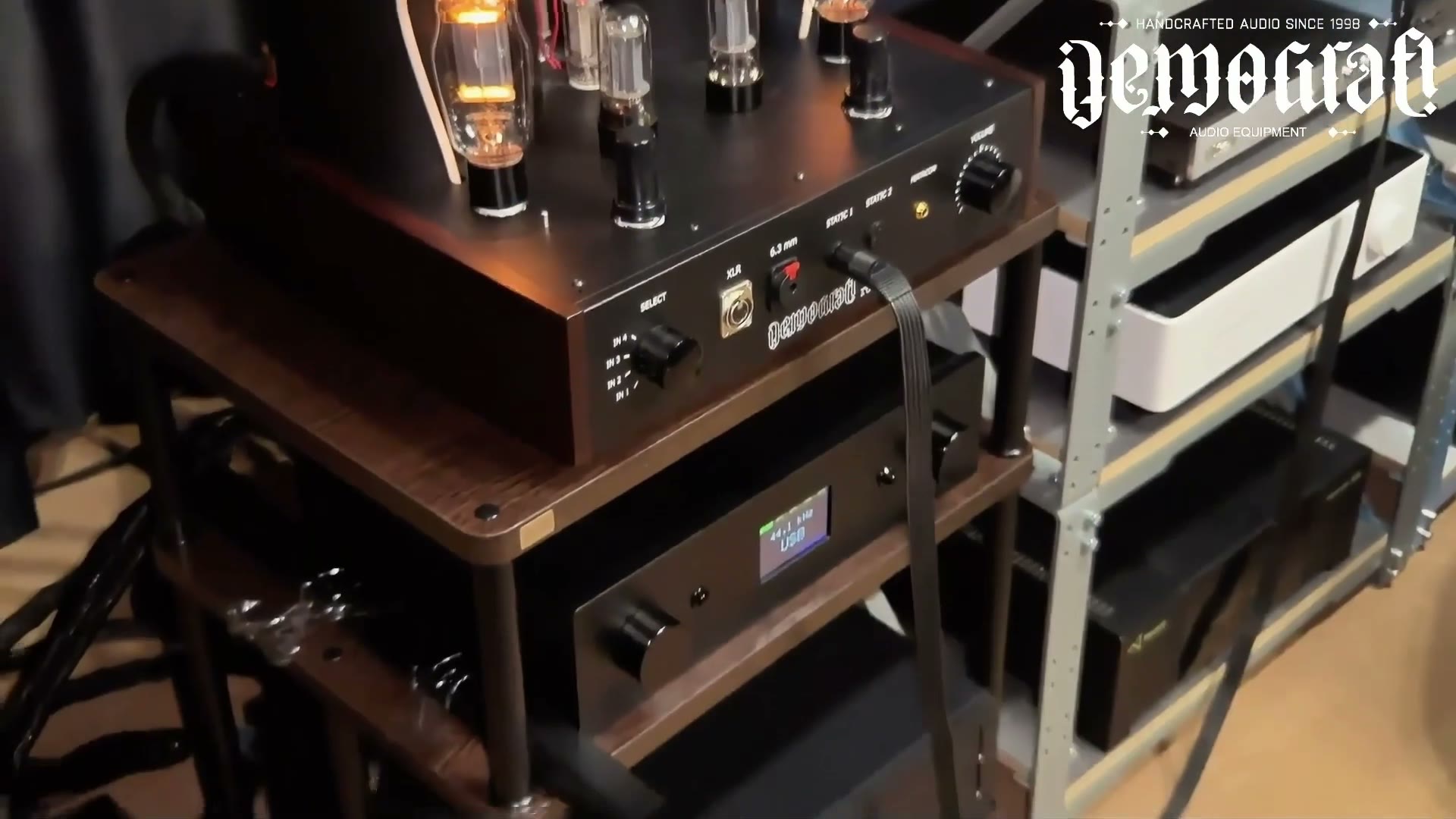
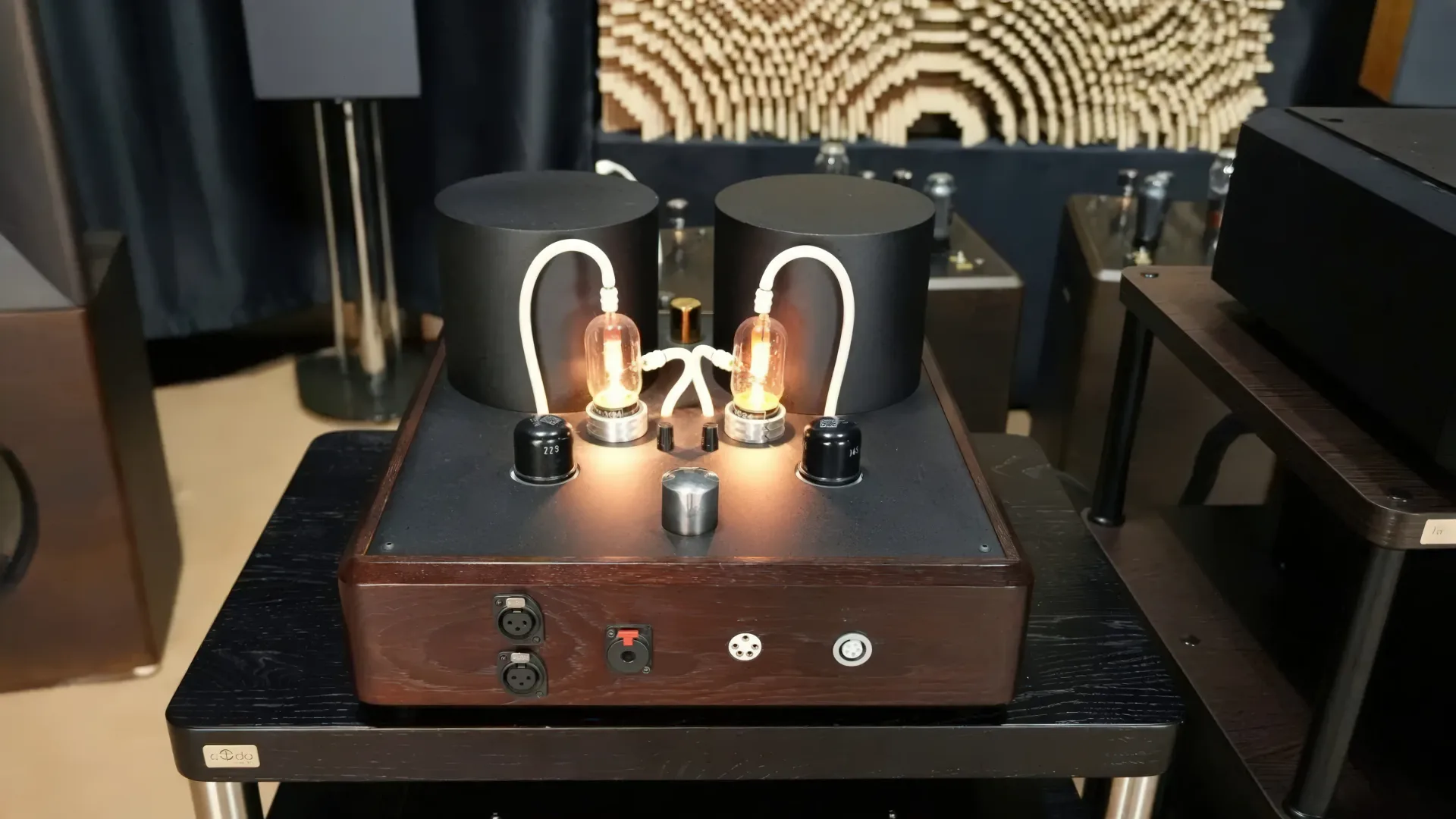
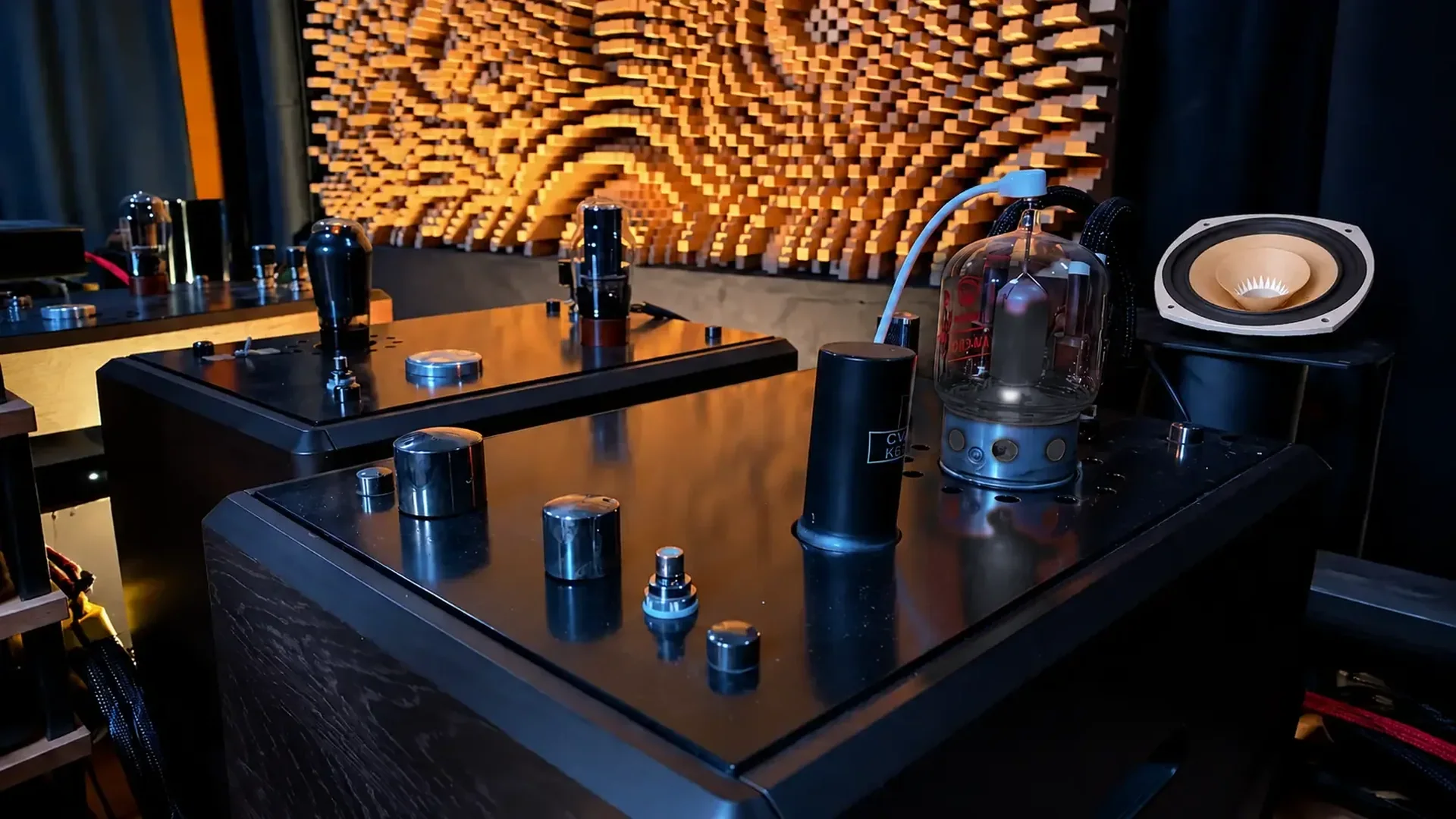
Hand-built tube amplifiers, DACs and loudspeakers. Made by Dmitriy Gubchenko, built to order.
Demograf Audio
High-End
Atelier
Built to order · 1-year warranty · Insured worldwide shipping, quoted separately · Designed since 1998
Made by Dmitriy Gubchenko.
Demograf Audio was founded by Dmitriy Gubchenko in 1998. Dmitriy leads the design and voicing of the circuits; each unit is assembled, tuned and measured by Dmitriy and his team. Amplifiers, digital sources and loudspeakers are built individually, to order, around components we believe are irreplaceable: vintage NOS tubes, copper, multibit NOS converters and handmade transformers. Everything else comes second.
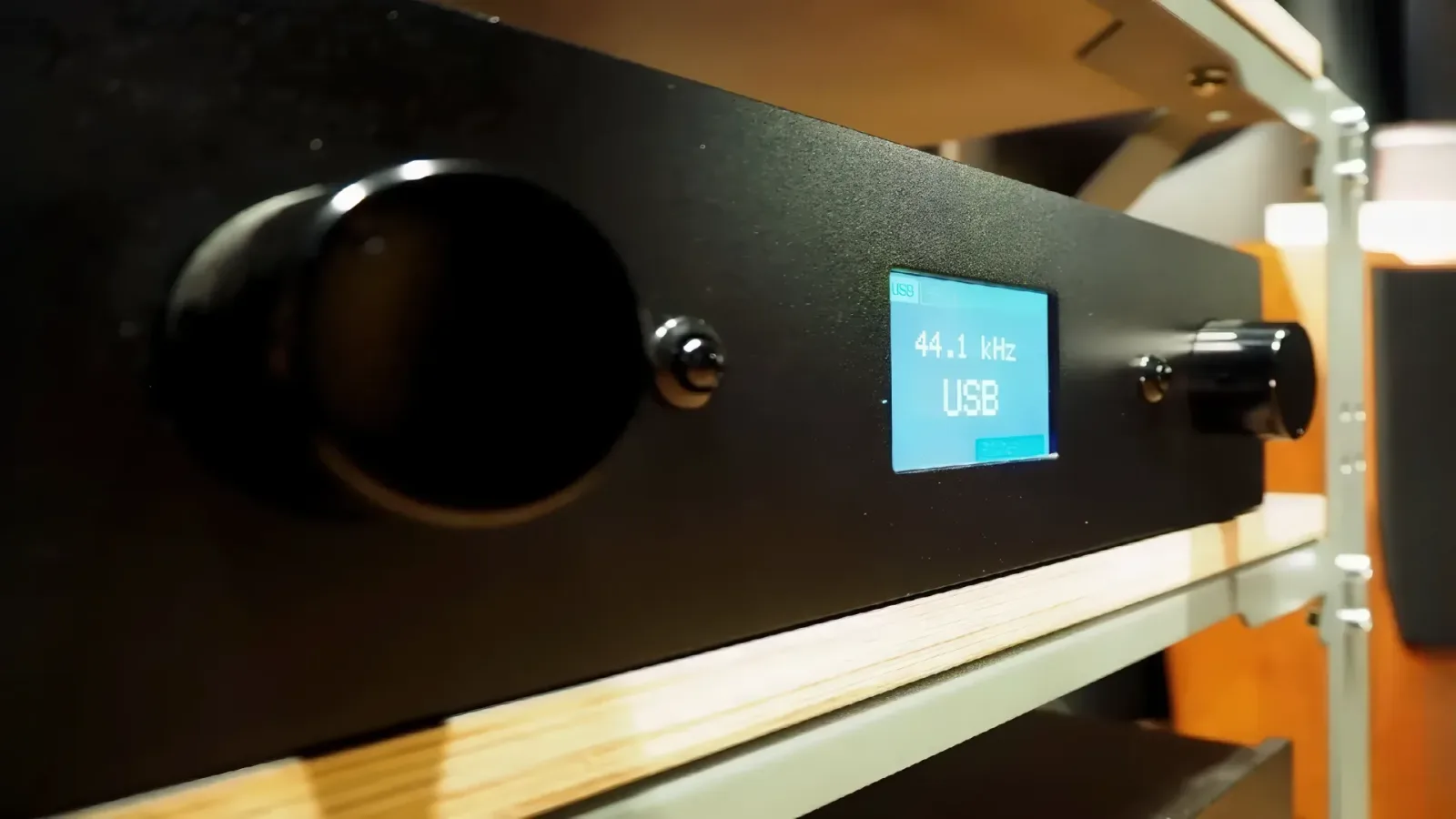
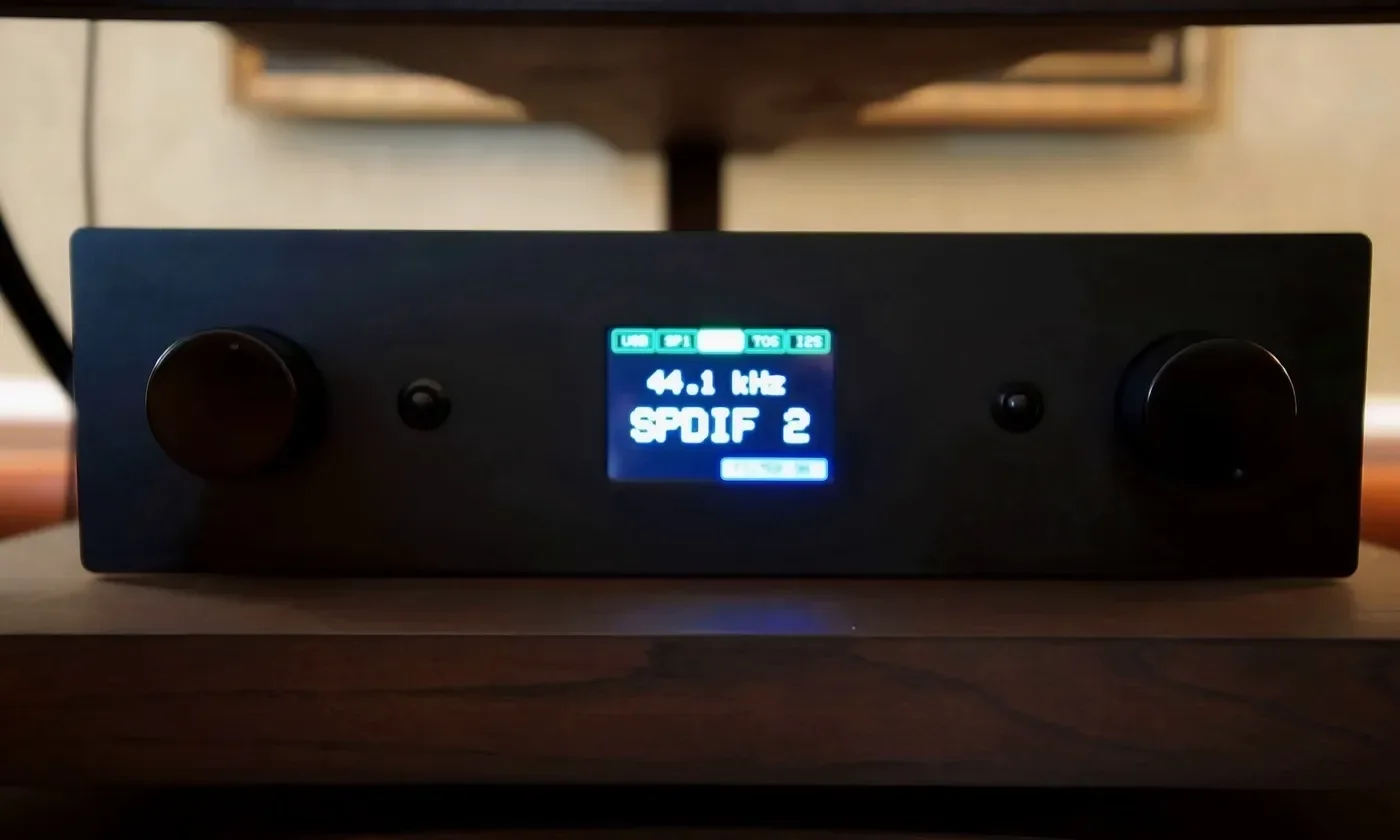
Programmable Logic & NOS
Digital sources on programmable logic, on multibit NOS converters such as the TDA1541 and PCM63, and on the vintage TDA1547 — they play the recording as it was mastered.
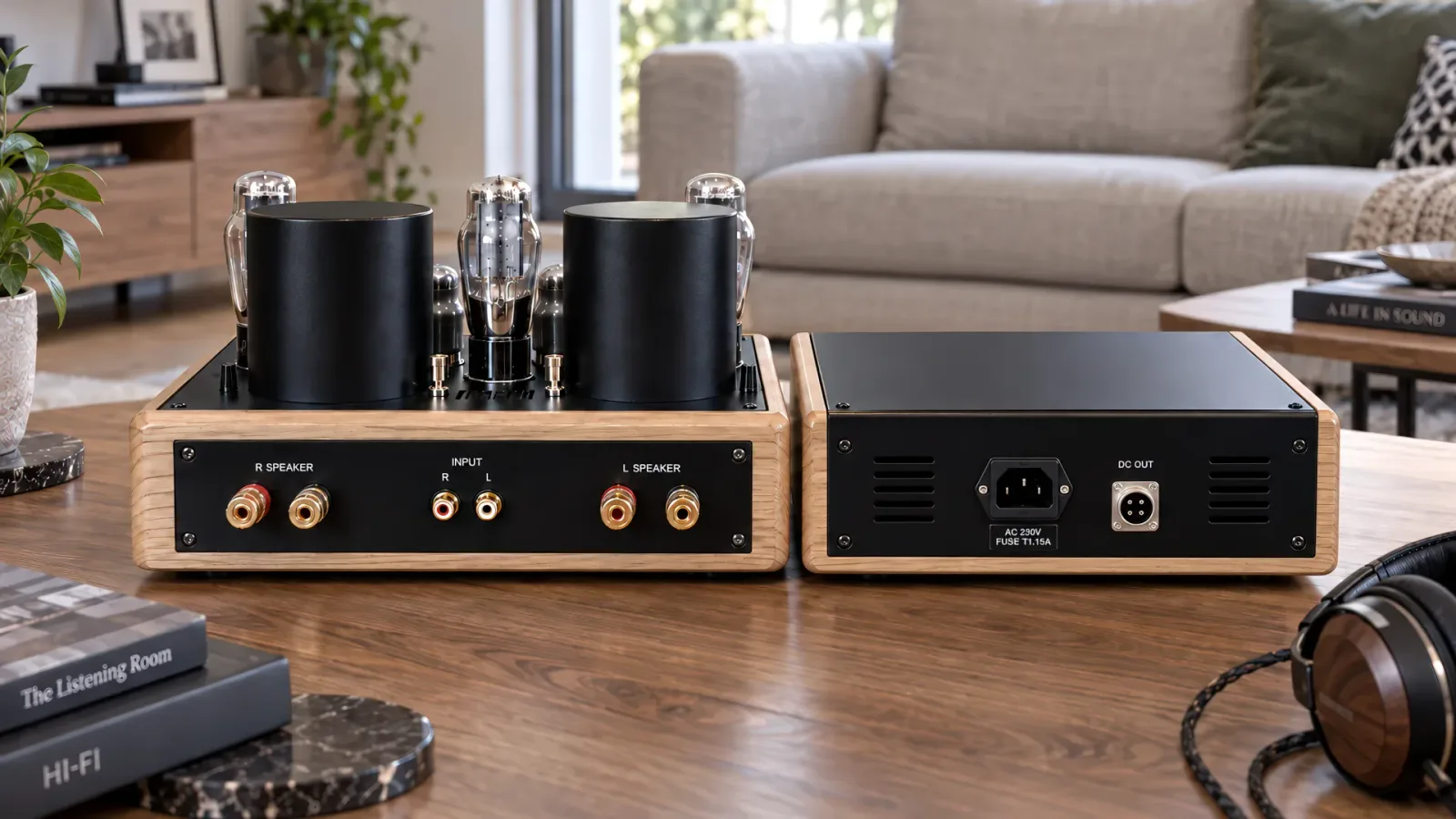
Custom transformers & chokes
Output, power and interstage transformers and chokes are wound to our specification for each circuit; Tango, Tamura or Hashimoto transformers are fitted on request.
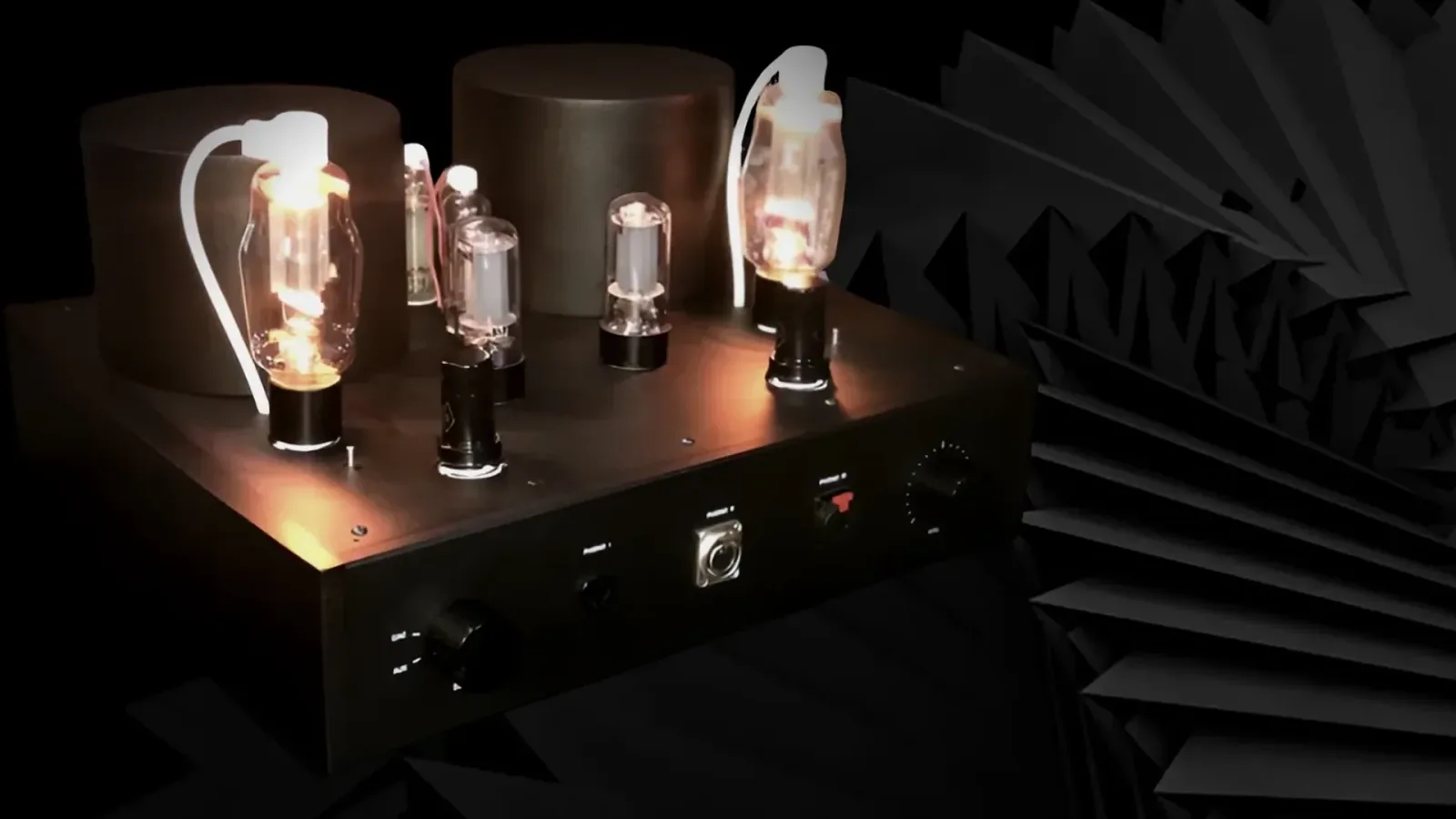
Vintage NOS Tubes & Copper
Vintage NOS tubes — GM-70, 6D22S, 6Zh4, 5Ts4M — and solid-core copper, selected and matched by ear and on the bench.
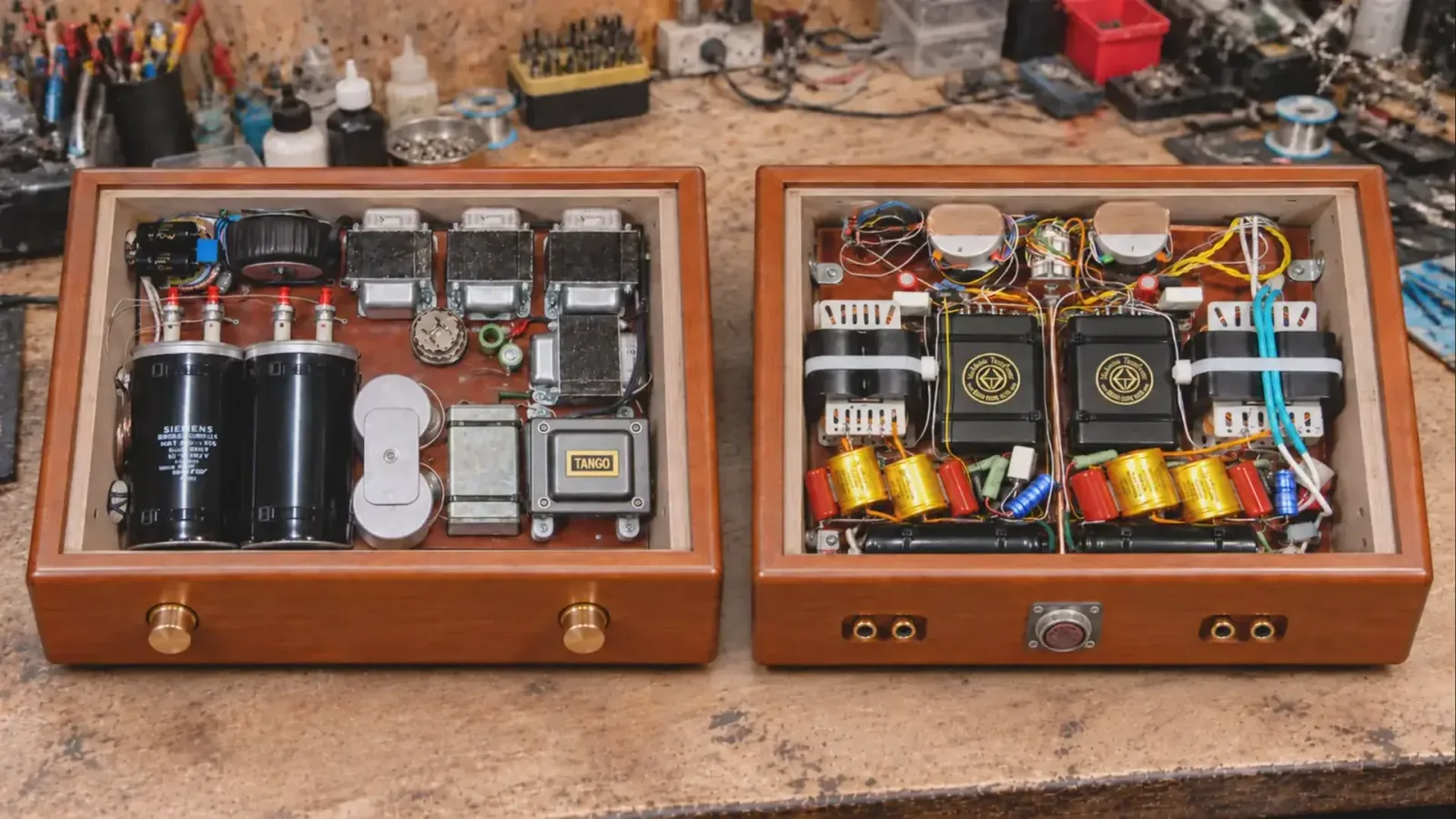
PTP Wiring & Zero NFB
Point-to-point wiring instead of printed boards and circuits without global negative feedback: the signal takes the shortest path.
- 7
- pieces of gear a year
- 1998
- year founded
- 1
- year of warranty (extra warranty available: +1 or +2 years)
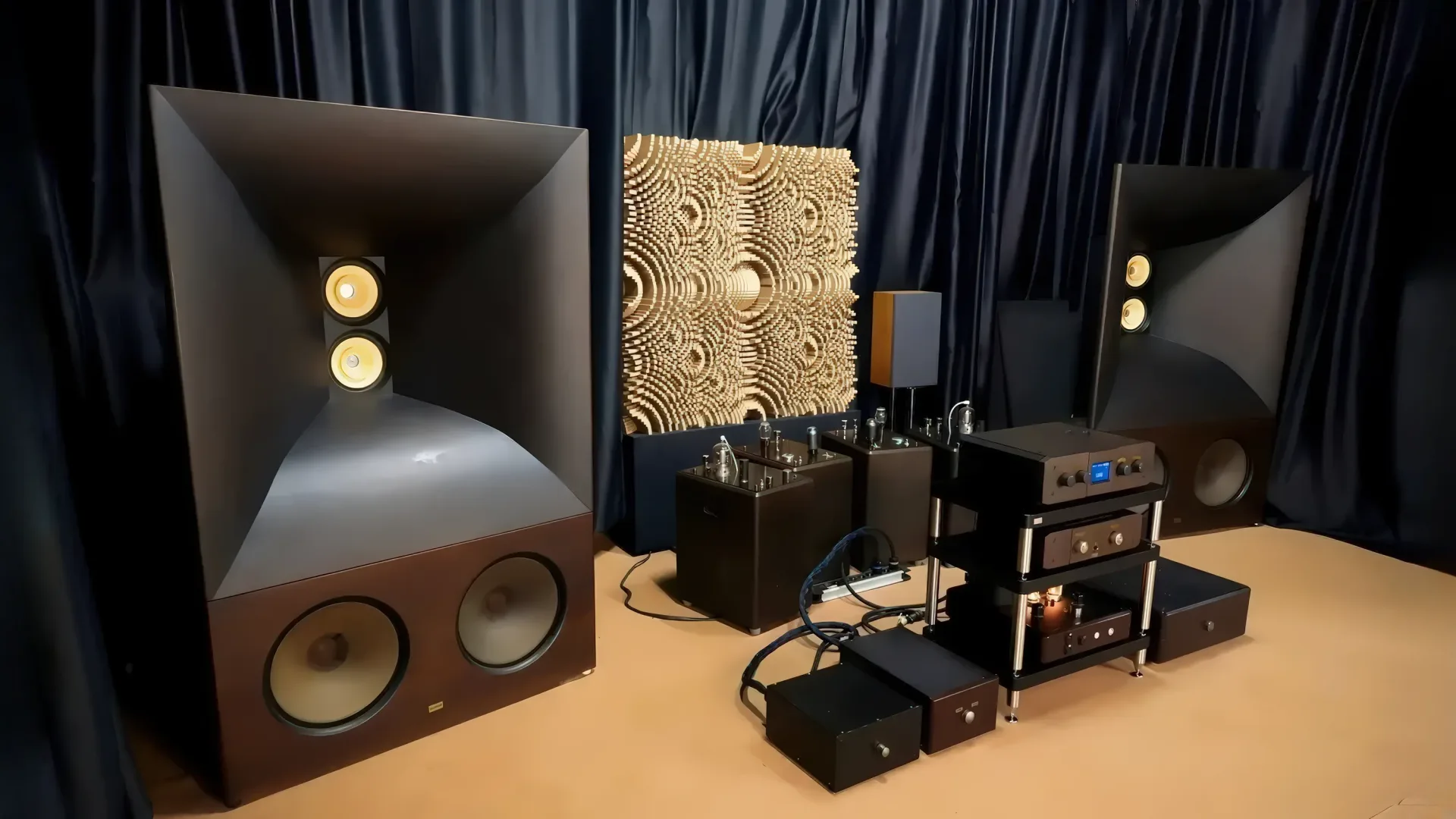
Founder


Engineering developed in the atelier
Four pieces of engineering behind Demograf Audio gear — from the iron in every amplifier to the logic inside the converter. They are the reason Demograf Audio gear sounds the way it does.
Transformers & chokes
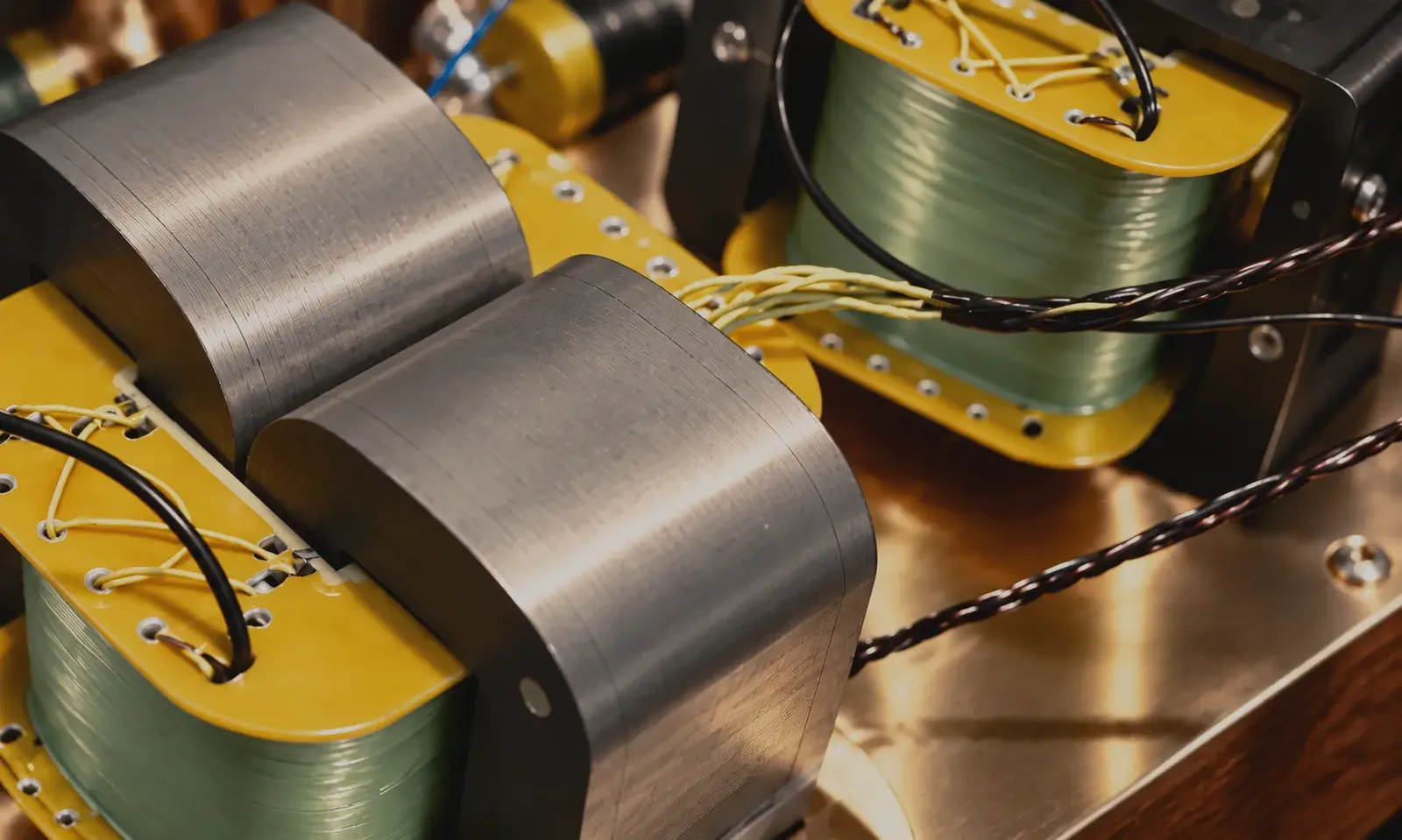
C-Core transformers and chokes on grain-oriented steel
Demograf Audio amplifiers, preamplifiers and power supplies run on magnetic components wound to our specification. The C-core range uses classic grain-oriented transformer steel cut into C-core geometry: low leakage inductance, tight magnetic coupling and linear behaviour — audio iron built to the standard of the reference Japanese transformers it is measured against.
- Core
- Classic C-core
- Steel
- Grain-oriented transformer steel
- Transformer windings
- Interleaved multi-layer, hand-wound
- Chokes
- High-current single winding, calibrated air gap
- Production
- Wound to the specification of each piece of gear
The C-core foundation
A cut C-core of grain-oriented transformer steel has lower core losses and carries a higher flux density than standard EI laminations. In the listening room that means deeper bass extension, faster transients and cleaner timbres.
Hand-wound, interleaved windings
Output and interstage transformers are wound by hand in interleaved multi-layer sections to keep parasitic capacitance down. Power chokes use heavily insulated copper of generous gauge for minimal DC resistance, with a calibrated air gap.
Taps for your circuit
For tube-circuit builders and multi-purpose systems, a universal configuration adds custom-calculated primary or secondary taps, so one transformer can serve several tube topologies or load impedances over the years.
Volume control
Transformer volume control, in a tube or a solid-state preamplifier
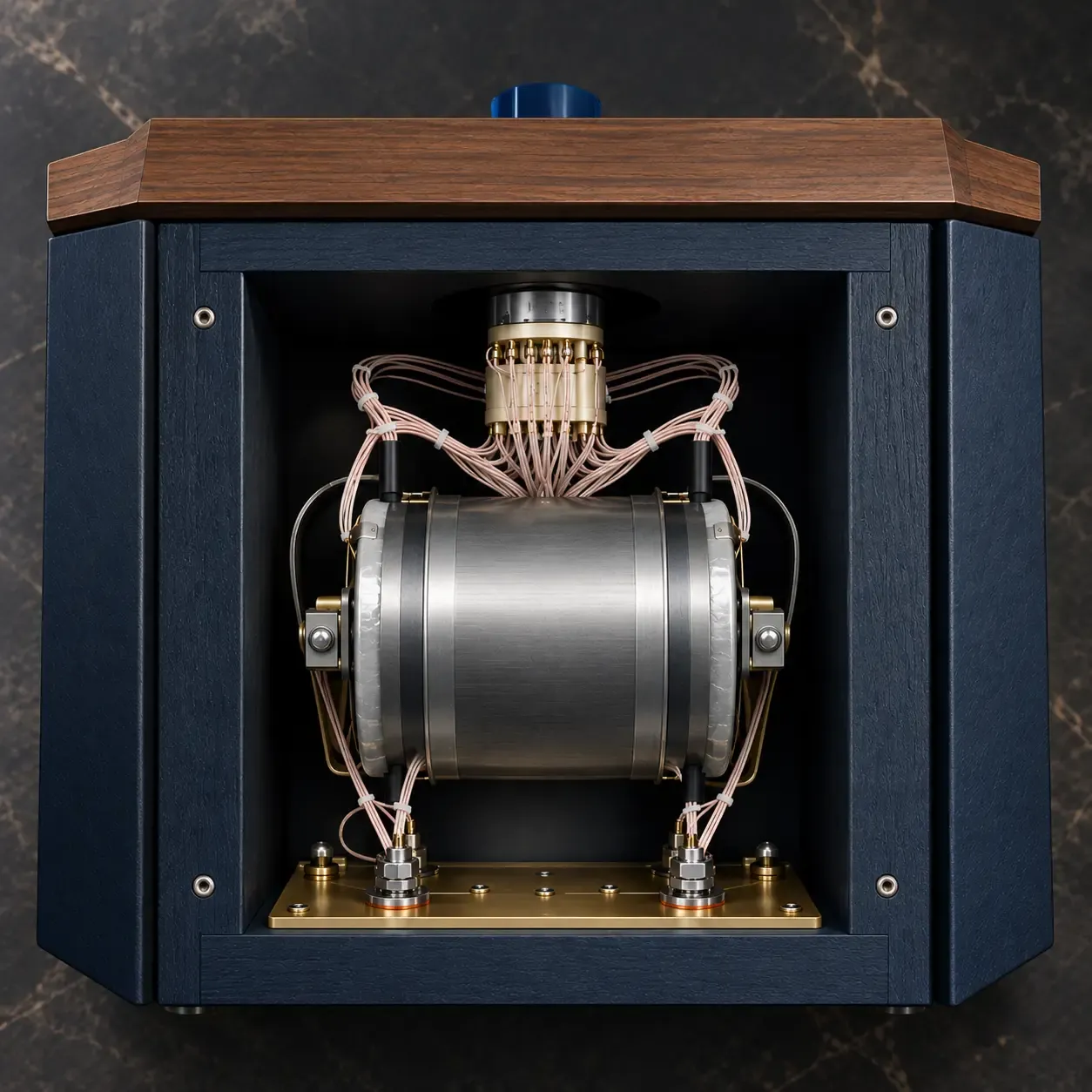
The heart of the Hector preamplifier is a Demograf Audio transformer volume control (TVC) on a Swiss stepped mechanism. Hector is built in two versions, tube and solid-state; the tube version takes vintage EL8, AL4 or ML6 tubes. Built dual-mode, either version switches its active stage out: the TVC then works alone, with nothing powered in the signal path, so it adds no noise from the grid and lets the source, amplifier and loudspeakers be heard exactly as they are.
- Type
- Tube or solid-state; passive mode optional
- Attenuator
- Demograf Audio TVC, Swiss stepped mechanism
- Selector
- Elma rotary switch
- Internal wiring
- Proprietary “RareCoreFusion” Alloy
- Connections
- RCA (balanced XLR on request)
A purist passive path
Without a power supply there is nothing to hum, nothing to drift and no grid noise to filter. The TVC attenuates by transformer ratio rather than by burning signal in a resistor, which keeps dynamics and drive intact at low volume.
TVC on a Swiss mechanism
The attenuator is wound to our specification and switched by a Swiss stepped mechanism, inspired by the Stevens & Billington TX-103 passive volume control; inputs are selected on an Elma rotary switch. The same stepped attenuator is offered as an upgrade in the tube amplifiers.
Tube, solid-state or passive on one platform
The platform grows with the system: relay-switched passive TVC with remote control, active solid-state or active tube preamplifier, or a dual-mode unit that switches between the passive TVC and an active stage — with vintage EL8, AL4 or ML6 tubes in the tube versions.
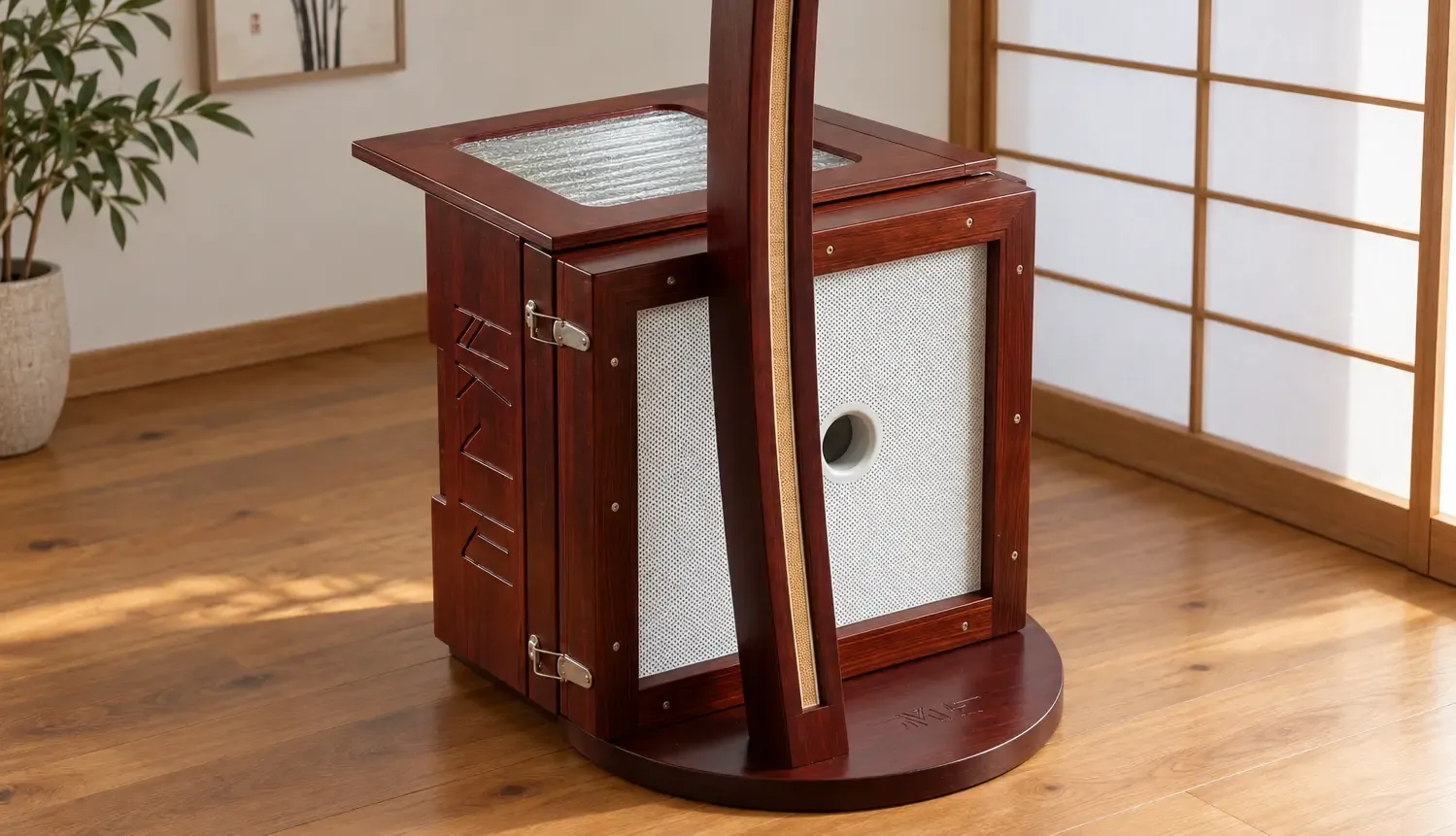
Transducers
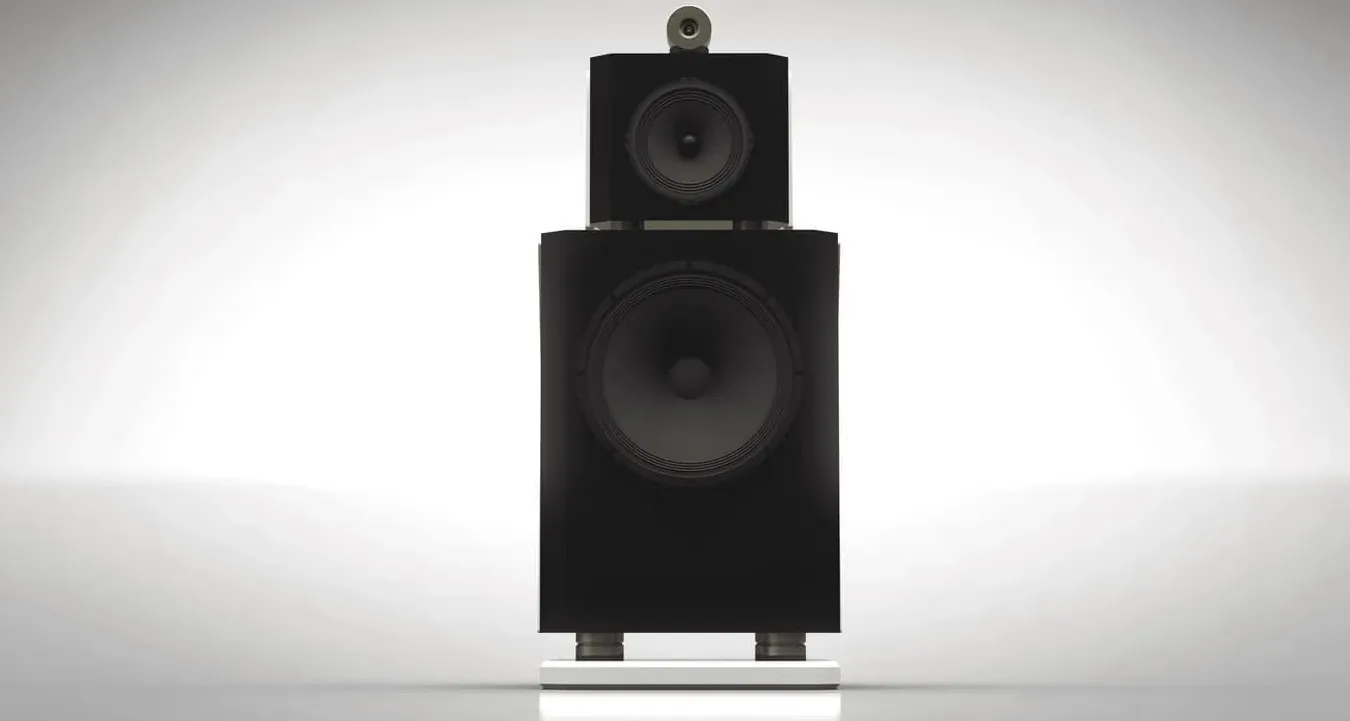
Full-range electrostatics with an electrostatic isobaric bass
In the Atreus — developed over thirteen years of research and completed with Demograf Audio crossover and amplification — every frequency comes from an electrostatic membrane, the bass included. There is no dynamic woofer anywhere in the system.
- Bias voltage
- 5000 V
- Frequency response
- 20 Hz – 20 kHz
- Sensitivity
- 85–86 dB
- Impedance
- 2–4 Ω
- Room
- From 20–25 m²
A 2-micron membrane
The treble and midrange panels use a 2-micron membrane with a conductive coating, polarised at 5000 V. A virtually massless radiating surface gives the speed, micro-detail and transparency electrostatics are known for.
Electrostatic isobaric bass
The bass section stacks six ultra-thin membranes between eight 3 mm steel stators in an isobaric pack. It reaches down to 20 Hz with the same speed as the panels above it — tactile bass without the inertia of a cone.
Curved and flat panels, open baffle
Curved panels focus the sound on the listening position, flat panels work alongside them, and the open-baffle construction removes the colouration of a cabinet altogether.
Demograf Audio crossover and amplification
An optional external analogue crossover sets the frequency split without phase rotation, and four dedicated Class D or Class AB amplifier modules can drive the two sections independently.
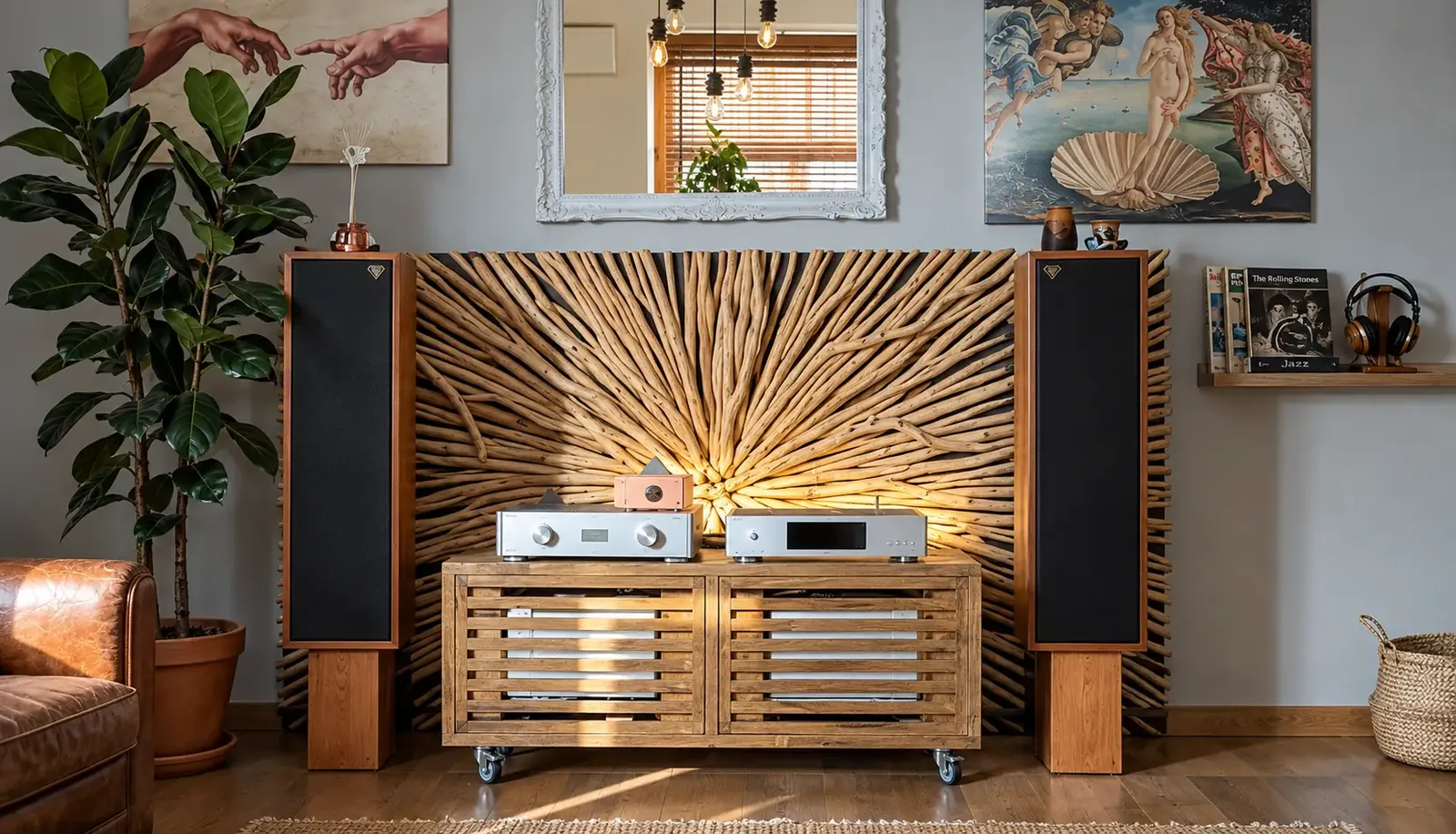
Digital conversion
Programmable-logic (FPGA) conversion with a window filter
Prometheus is built on a programmable-logic chip running Demograf Audio software. PCM is converted to DSD on the chip and turned into a balanced, push-pull signal by a logic-based “window filter” — so there is no LC output filter, and none of the phase shift and transient smearing it brings.
- Core
- Programmable logic (FPGA) with Demograf Audio software
- Filter
- Logic-based window filter, no LC filter
- DSD
- Up to DSD1024 (I²S) / DSD512 (USB)
- PCM
- Up to 32-bit / 768 kHz
- Bandwidth
- 1 Hz – 50 kHz
Native DSD and PCM
DSD up to DSD1024 over I²S (HDMI) and DSD512 over USB; PCM up to 32-bit / 768 kHz. Coaxial S/PDIF, USB and I²S inputs are standard.
No LC filter in the path
Because the window filter does the reconstruction in logic, the analogue side carries no LC low-pass network. The bandwidth runs from 1 Hz to 50 kHz, and the sound is fast, detailed and natural.
Built like the rest of the atelier
Galvanically isolated transformers, proprietary RareCoreFusion alloy wiring, a ground-lift switch, and a solid-state or vacuum-tube output stage on AL4, EL8, EF14 or ML6.
Eleven pieces, inside and out
Inside Demograf Audio

Demograf Audio “Rubedo” AL4 Push-Pull E-Static AMP
Vintage AL4 Tubes. Jensen Capacitors. Tango Transformers. External kenotron PSU. Silver AMRG Resistors.
What others have written
What reviewers and owners have written
Demograf Audio’s name travelled abroad by word of mouth — through the small, exacting circle of electrostatic headphone owners in Poland, France, the United States and beyond.
HiFi Philosophy · Poland
“An absolutely maximalist design […] with no regard whatsoever for cost.”
Piotr Ryka’s four-part review of the Demograf Audio electrostatic amplifier.
Read the review →HiFi Philosophy · Poland
„ten ekstremalny wzmacniacz dla słuchawek elektrostatycznych”
“This extreme amplifier for electrostatic headphones.”
A follow-up on the amplifier’s second life: 4.5 kg more in the power supply and AL4 tubes from 1936, by Philips and Telefunken.
Read the article →Head-Fi · The Stax Thread
“Dmitry did not skimp on the quality of the components used.”
From a French member of the Stax community, writing to the amplifier’s owner on Head-Fi, the international headphone forum.
Read the post →Homecinema-fr · France
« 42 kilogrammes de savoir faire, sans concessions ! »
“42 kilograms of know-how, without compromise.”
The French Stax owners’ thread on the amplifier and its outsized external power supply.
Read the thread →Homecinema-fr · France
« ne se limite pas à des amplificateurs essentiellement japonais ou américains »
The small world of high-end amplifiers for Stax and Sennheiser electrostatics “is not limited to essentially Japanese or American amplifiers.”
Read the thread →MSB Technology · USA
“…the image of Dmitry Gubchenko (designer of ‘Demograf’ audio equipment […])…”
Head-Fi
The listener on the product page of MSB Technology’s $37,950 SELECT electrostatic amplifier was Dmitriy Gubchenko; the community recognised him at once. Dmitriy had no part in the MSB product.
Read the thread →On the record
-
2013
HiFi Philosophy publishes a four-part feature on the Demograf Audio electrostatic amplifier Poland · followed by a second article in August
Source → -
2013
Discussed by Stax owners on Head-Fi and Homecinema-fr USA · France
Source → -
2016
Dmitriy Gubchenko’s photograph appears on MSB Technology’s SELECT amplifier page USA
Source → -
2021
A Demograf Audio amplifier in the analogue reference chain at the Hi-Fi & High End Show Zavalinka Records stand: Studer tape machines → Demograf Audio → electrostatic headphones
-
2022
Included in HiFi Philosophy’s guide to headphone amplifiers Poland · part one
Source →

Quotations are reproduced in their original language, with our translation and a link to the source. MSB Technology, Stax, Sennheiser, Studer and other names belong to their owners and are mentioned for reference only; no affiliation or endorsement is implied.
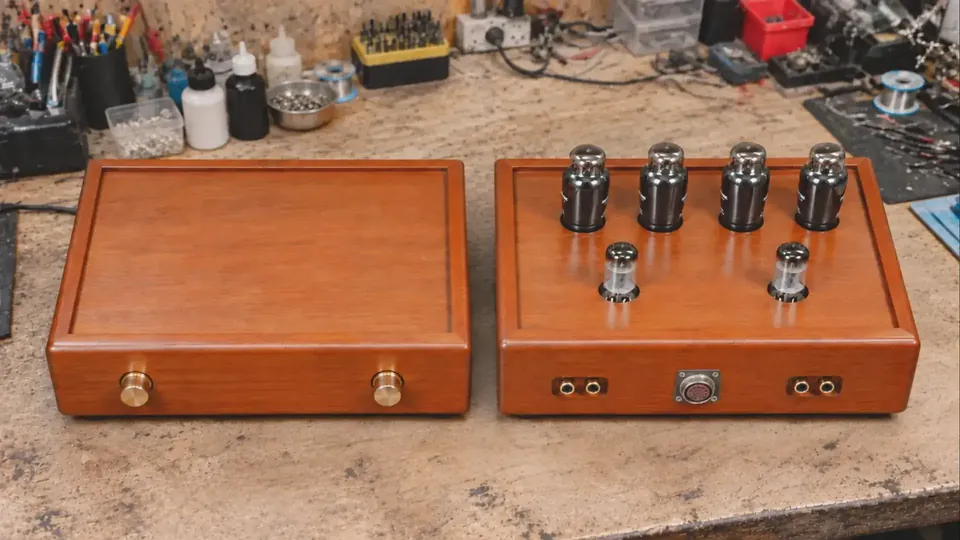
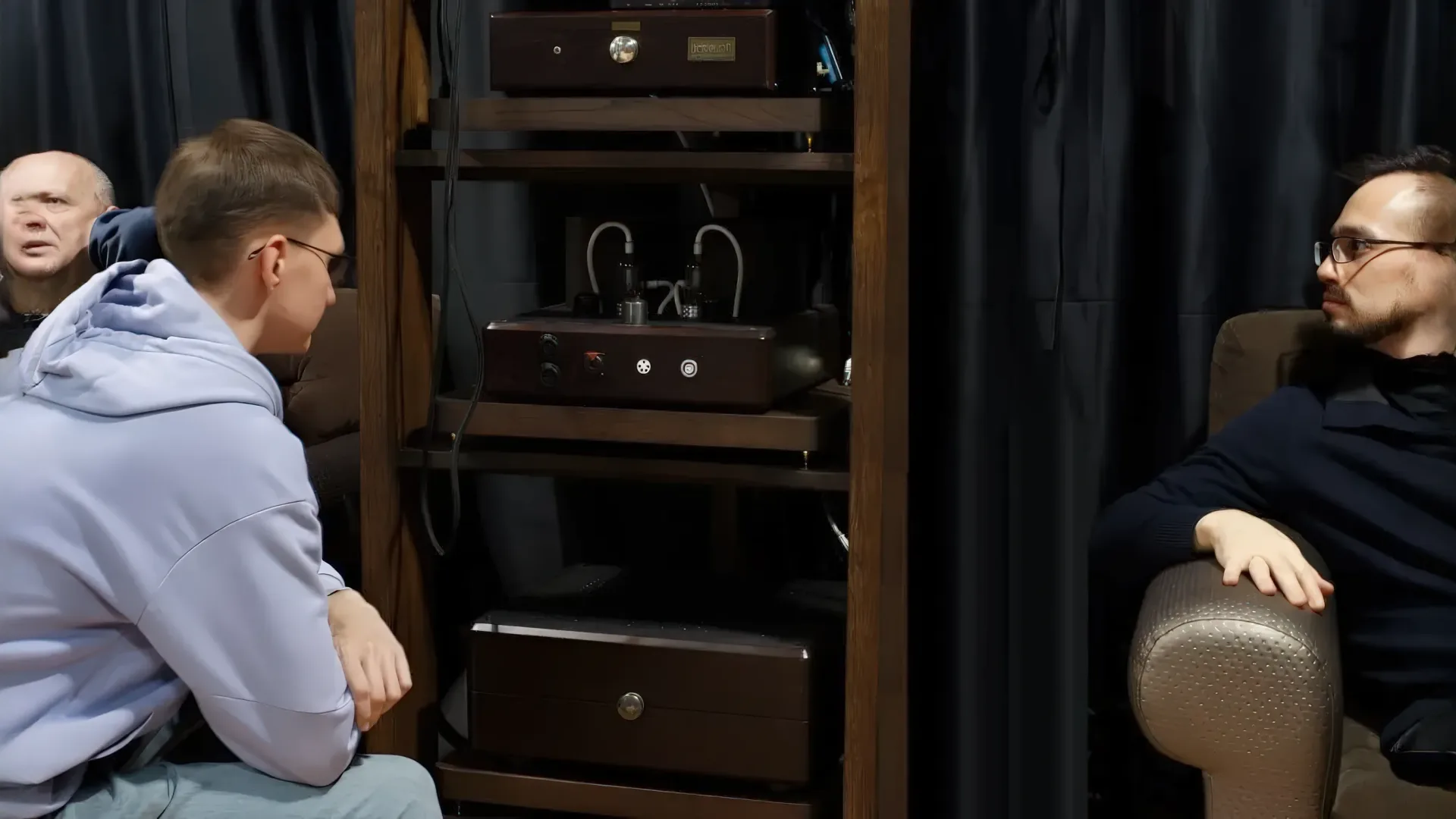
Article · 2026-11-07
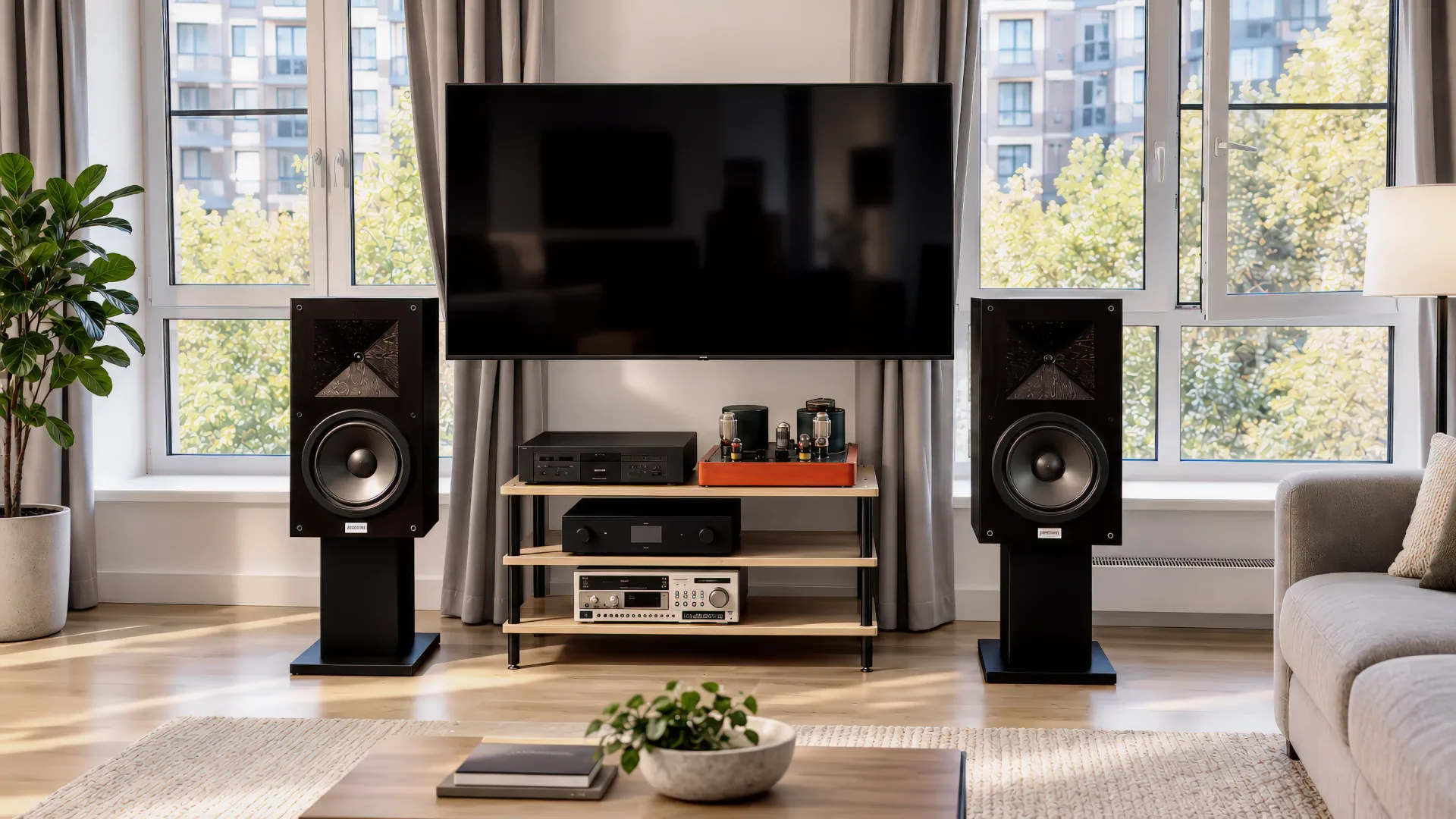
How to read an amplifier measurement report
Every Demograf Audio amplifier ships with its own measurement report, and a page of graphs can look like a wall of lines. This guide explains the common charts in plain words, using a published report on a Tantal headphone output as the worked example. It also sets out what a report cannot tell you before you choose.
Article · 2026-11-07
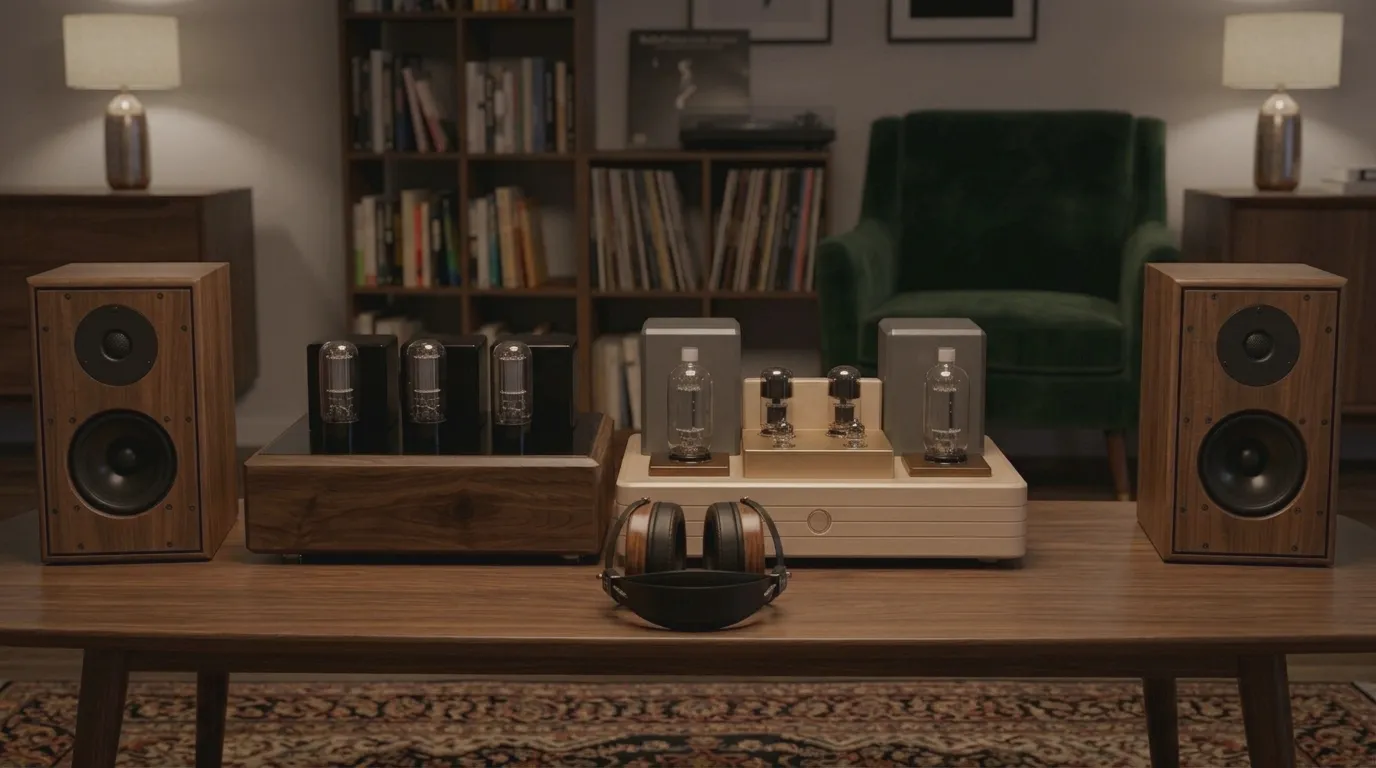
Hi-fi loudspeakers or studio monitors: which one for home listening
Studio monitors and hi-fi loudspeakers do the same physical work, turning an electrical signal into sound, but they are made for different rooms and different jobs. This guide explains how each is used and what to check before you choose for a home listening room. The examples come from the specifications of the Demograf Audio loudspeakers.
Article · 2026-10-29
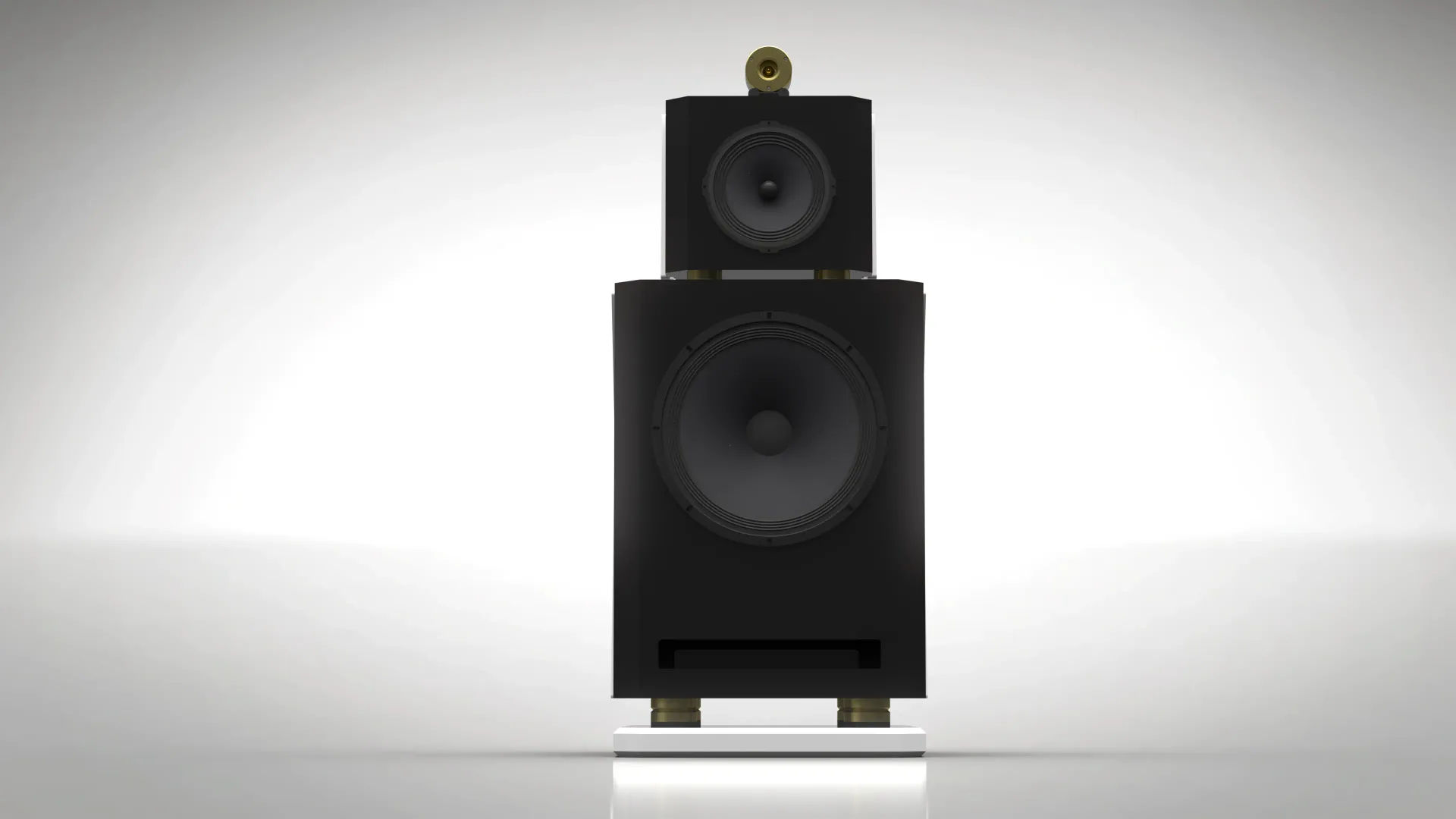
Demograf Endymion and Audio Note Ongaku compared: single-ended 211 and 845 amplifiers
The 211 and the 845 are transmitting triodes used in several single-ended amplifiers, among them the Audio Note Ongaku, a 211 integrated amplifier from Audio Note (UK). This guide puts the Demograf Endymion, which is built for the 845, the 211 or the 805, next to the Ongaku and its copper-wired sibling, the Jinro. It sets out circuit, tubes, power, outputs, size and how each is sold, using the makers' own published data, and then suggests how to decide. It does not rate the sound of any of them: we have not measured or listened to the Ongaku or the Jinro, and numbers on a data sheet do not settle how an amplifier sounds in your room.
Article · 2026-10-29
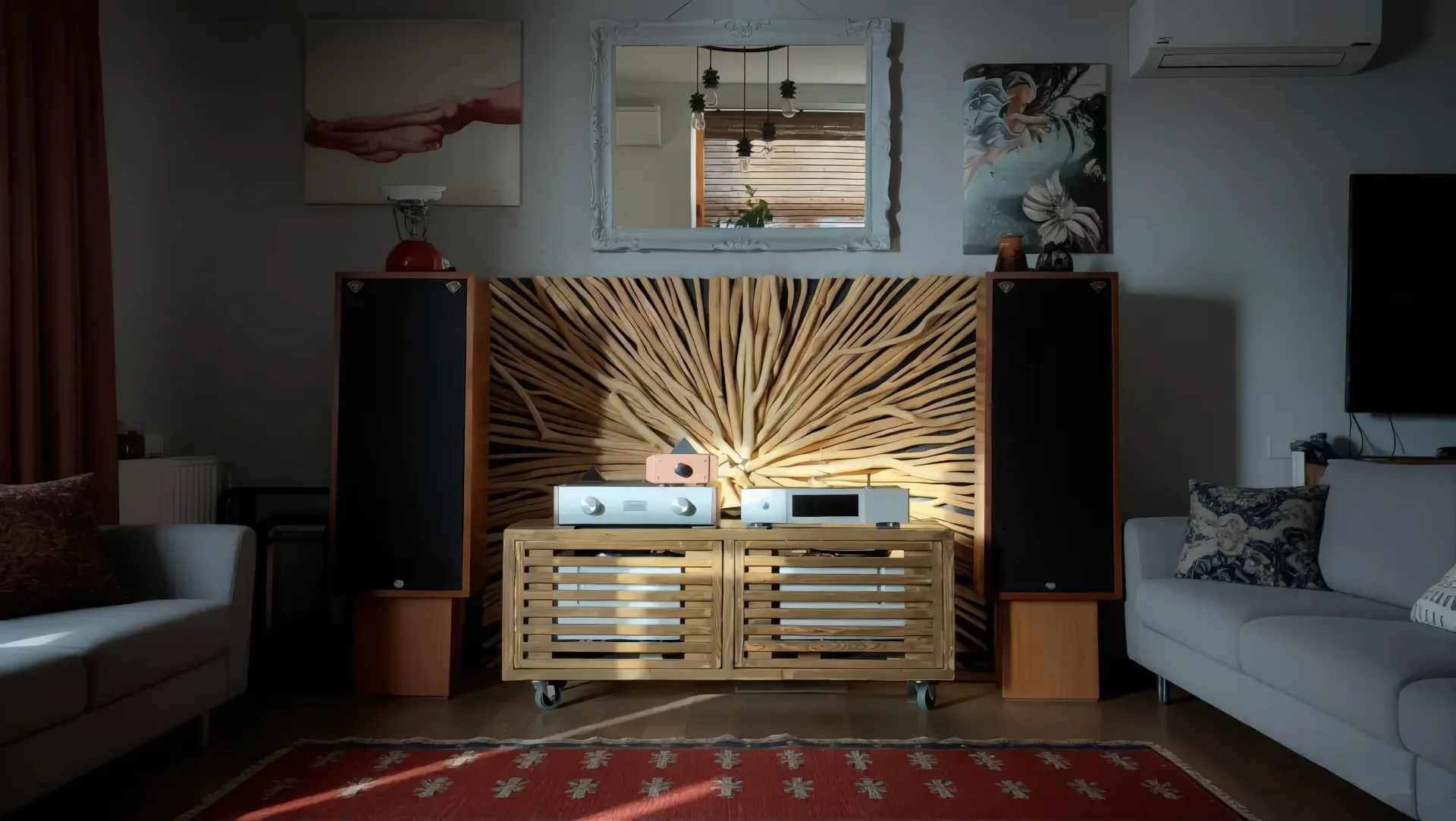
Single-driver loudspeakers in the room: walls, toe-in, height and distance
A single-driver loudspeaker plays the whole range from one cone, with no crossover dividing it between drivers. That changes how it should be placed: the axis of one driver carries all of the treble, the type of cabinet decides how much space it needs behind it, and its modest bass depends on the walls more than a large multi-way design does. This guide covers distance from the walls, toe-in, height and listening distance for full-range loudspeakers, with the facts about our single-driver model, Perseus MkII. Why one driver is used at all, and how it compares with a multi-way design, is explained in our guide to single-driver and multi-way loudspeakers.
Article · 2026-10-29
An external master clock for a DAC: what it does and when you need one
Every digital source and every DAC keeps time with a clock: an oscillator that tells the circuit when to read, send and convert each sample. An external master clock is a separate unit that supplies this timing reference to the rest of the system over a cable. This guide explains what jitter is, how an external clock connects, which equipment can use one, and when a system does not need it. It ends with the facts about Charon, our master clock.
Article · 2026-10-29
Balanced or single-ended inputs: what matters in a tube system
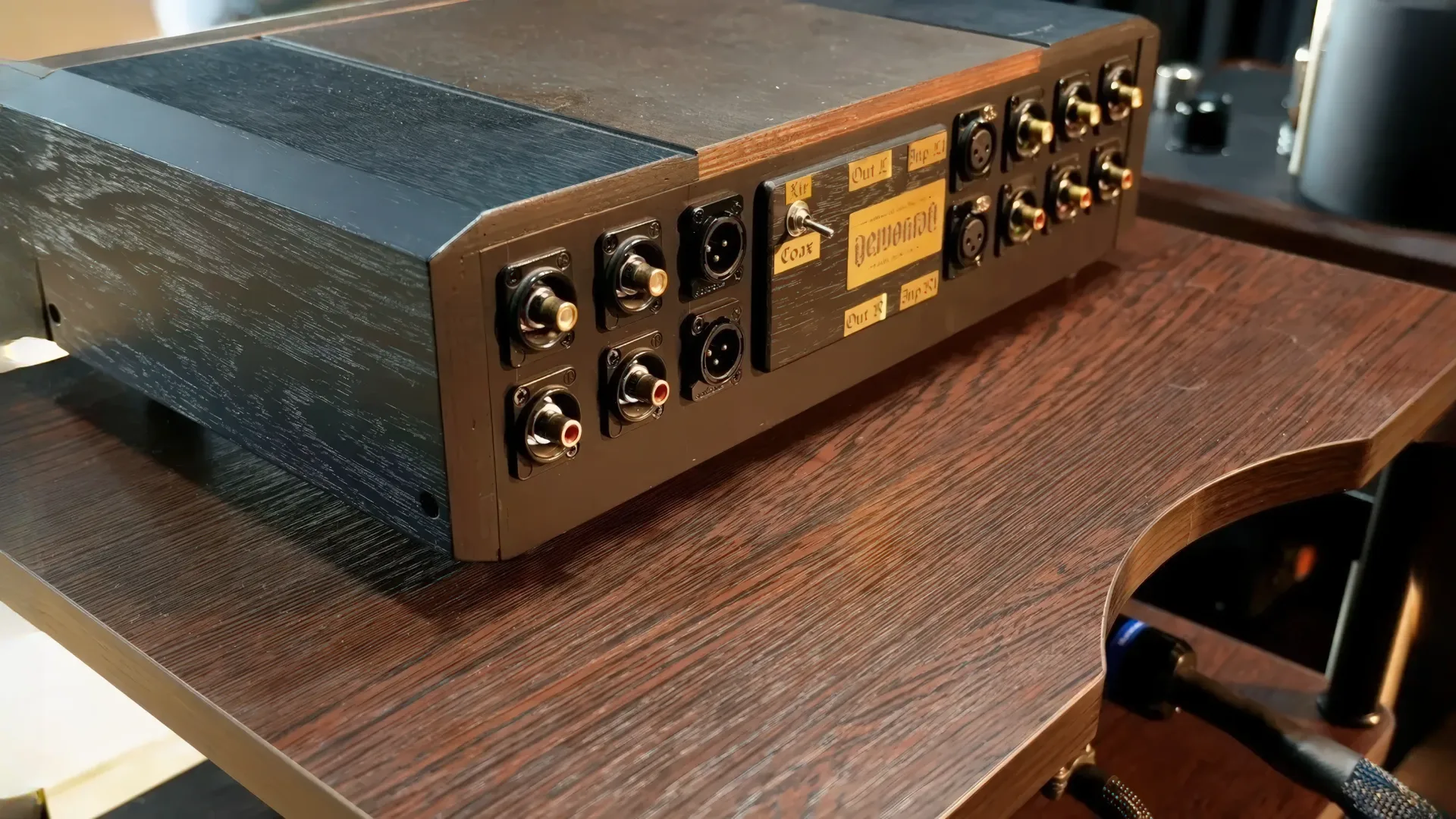
Most tube amplifiers and DACs arrive with RCA sockets, and many can be ordered with XLR as well. The two connectors carry the same music in different ways: an RCA lead is a single-ended, or unbalanced, connection, and an XLR lead is usually a balanced one. This guide explains what the difference does, when it matters in a home system, which Demograf Audio models have which connections, and what to check before you choose.
Atelier
Demograf Audio units are built to order. Current lead time is 6 months or longer, depending on the model. Every unit is made in Kazakhstan by Dmitriy Gubchenko. Shipping and insurance are paid by the buyer and shown as a separate line in your quotation. A 50% deposit reserves your place in the build queue.
Lead time
Made to order, seven pieces of gear a year, every one built by hand. Current lead time: 6 months or longer.
Request a build slot