
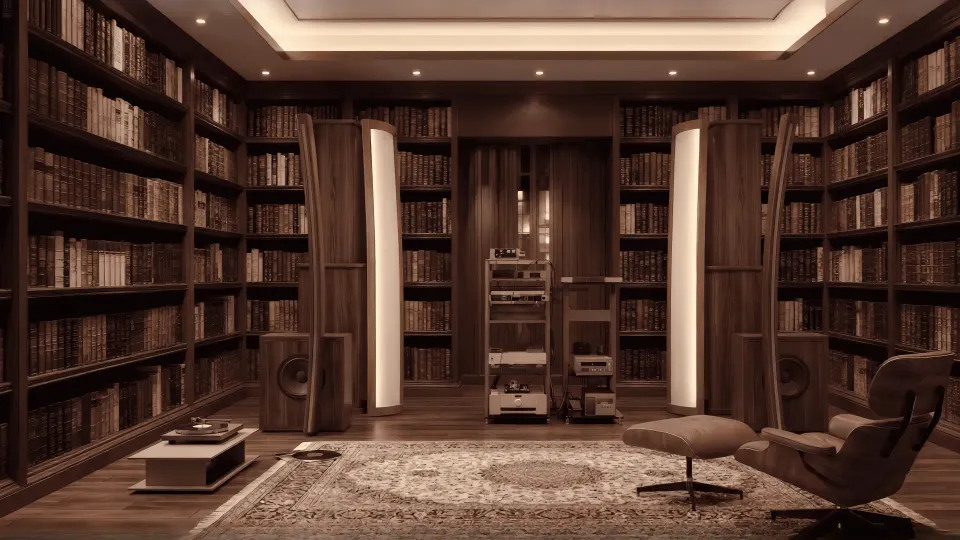
Menelaus
from $48,300 Made to order
Request a build slot Deposit, lead time and warrantyAll units in the photos are real. Some photos are AI-enhanced to improve image quality.
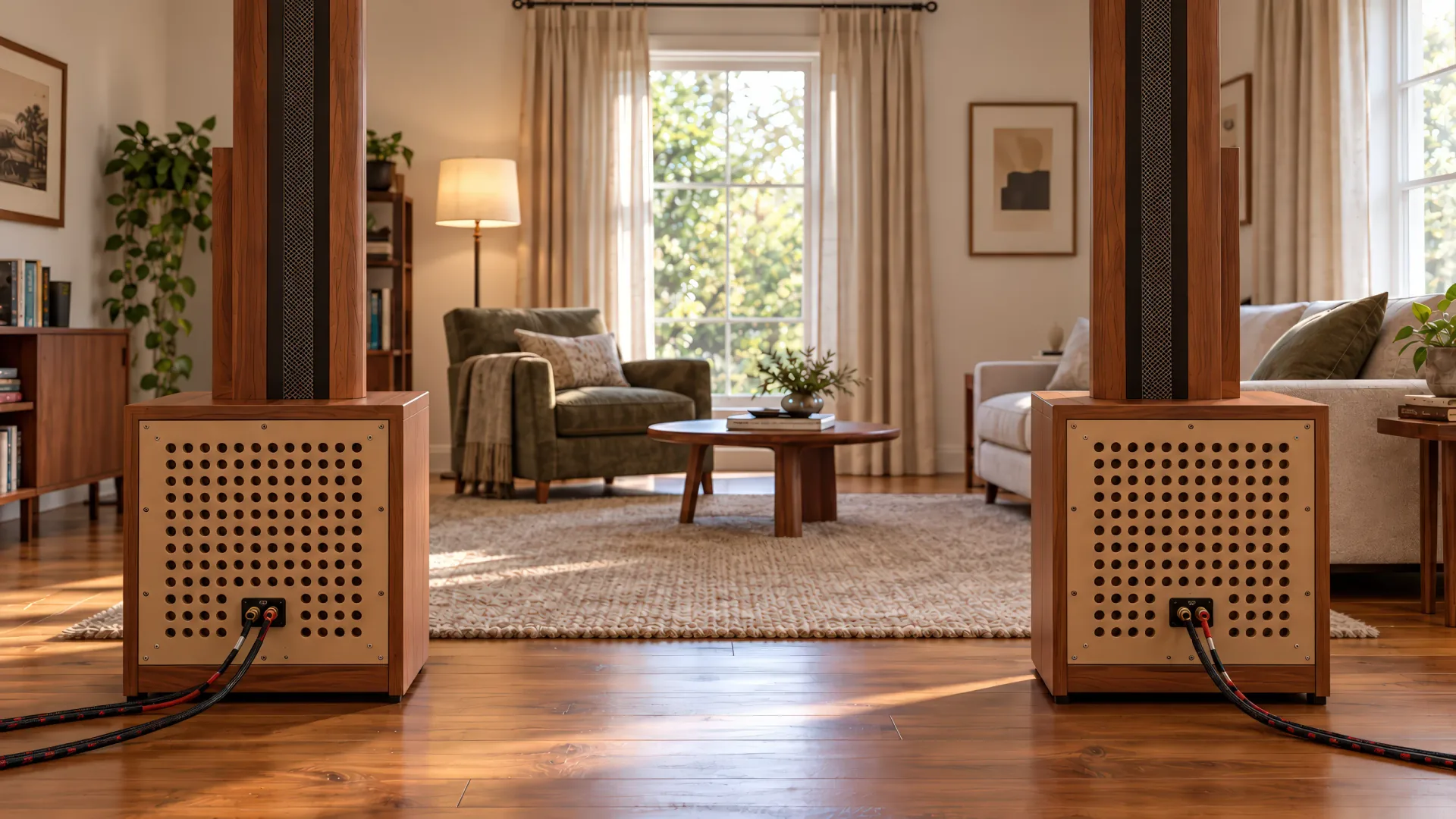
Sound
An almost massless diaphragm
From 600 Hz up the panel plays with the speed and freedom from colouration of an almost massless diaphragm.
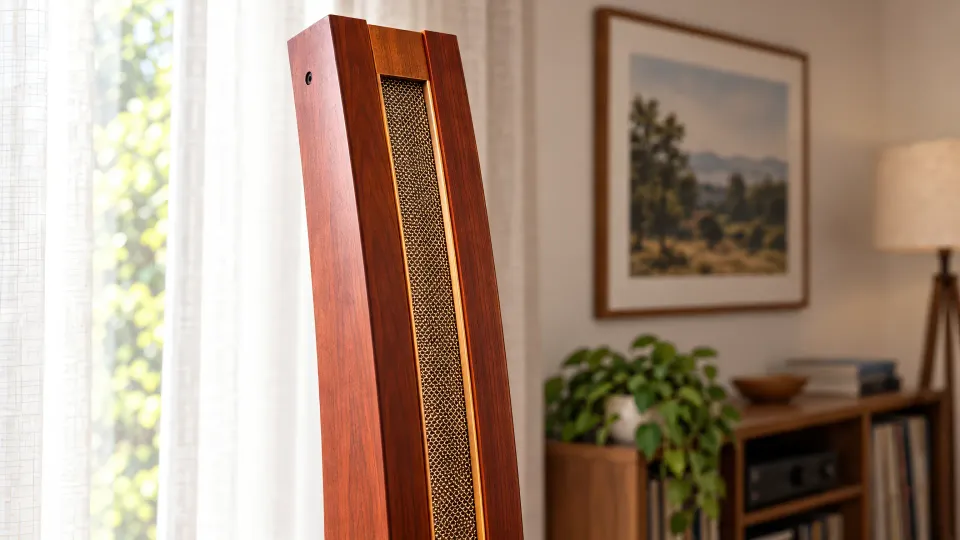
Bass for the room
A subwoofer set to the room
Below 600 Hz a subwoofer with electromagnet drive takes over; its level and frequency are adjusted to the room, and an external analogue crossover joins the two sections.
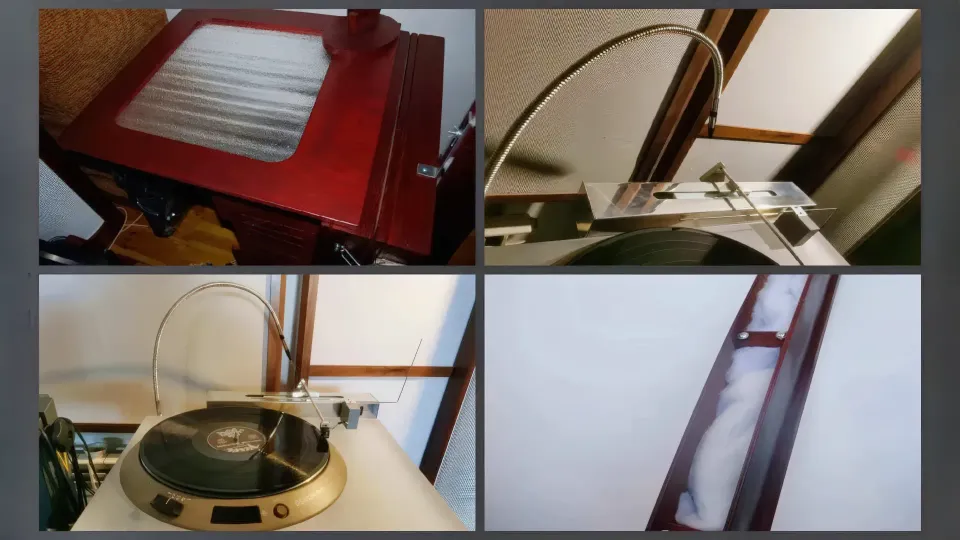
Menelaus
Numbered unit — Opus No. on the nameplate
- Model
- Hybrid electrostatic loudspeaker: curved and flat 2-micron ESL panels above 600 Hz, 12–15″ Demograf Audio subwoofer below
- In brief
- Curved and flat electrostatic panels with a 2-micron membrane above 600 Hz, and a Demograf Audio subwoofer below.
- Queue deposit
- 50% · from $24,200
- Lead time
- Seven pieces of gear a year, each built by hand to order. Current lead time: six months or more.
- Origin
- Made in Kazakhstan by Dmitriy Gubchenko
- Warranty
- 1 year (extra warranty available: +1 or +2 years)
Part of the Hypostasis collection
- Music it suits
- Vocal · acoustic · jazz · high-resolution recordings
- Compared with
-
- Atreus (fully electrostatic)
From the atelier
Menelaus is the hybrid sibling of the Atreus. Electrostatic panels, curved and flat, with a 2-micron membrane play everything from 600 Hz up, with the speed and freedom from colouration of an almost massless diaphragm. Below 600 Hz a Demograf Audio subwoofer with electromagnet drive takes over, and its level and frequency can be adjusted to the room. An external analogue crossover joins the two sections without the usual 2–5 kHz crossover artefacts.
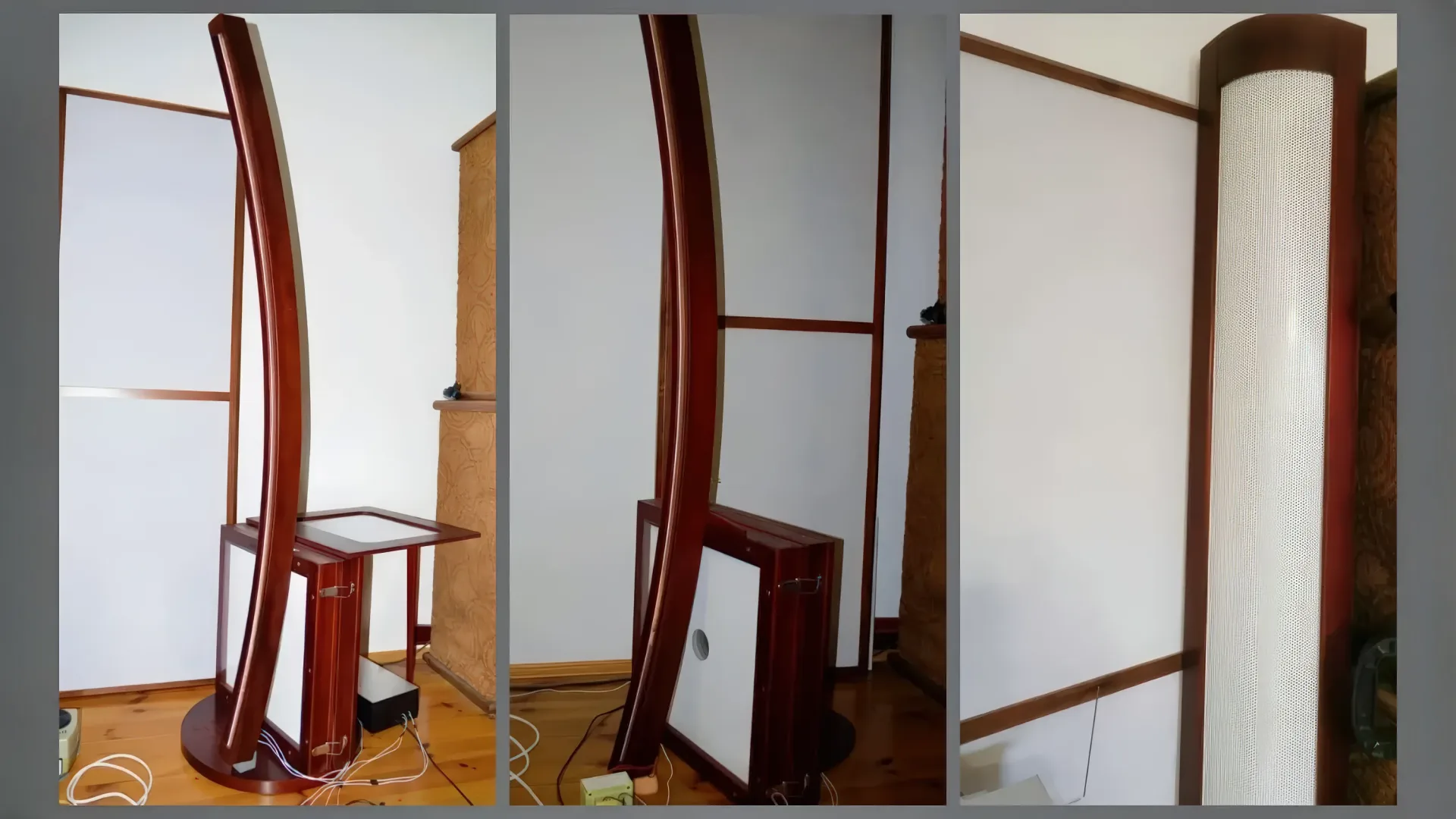
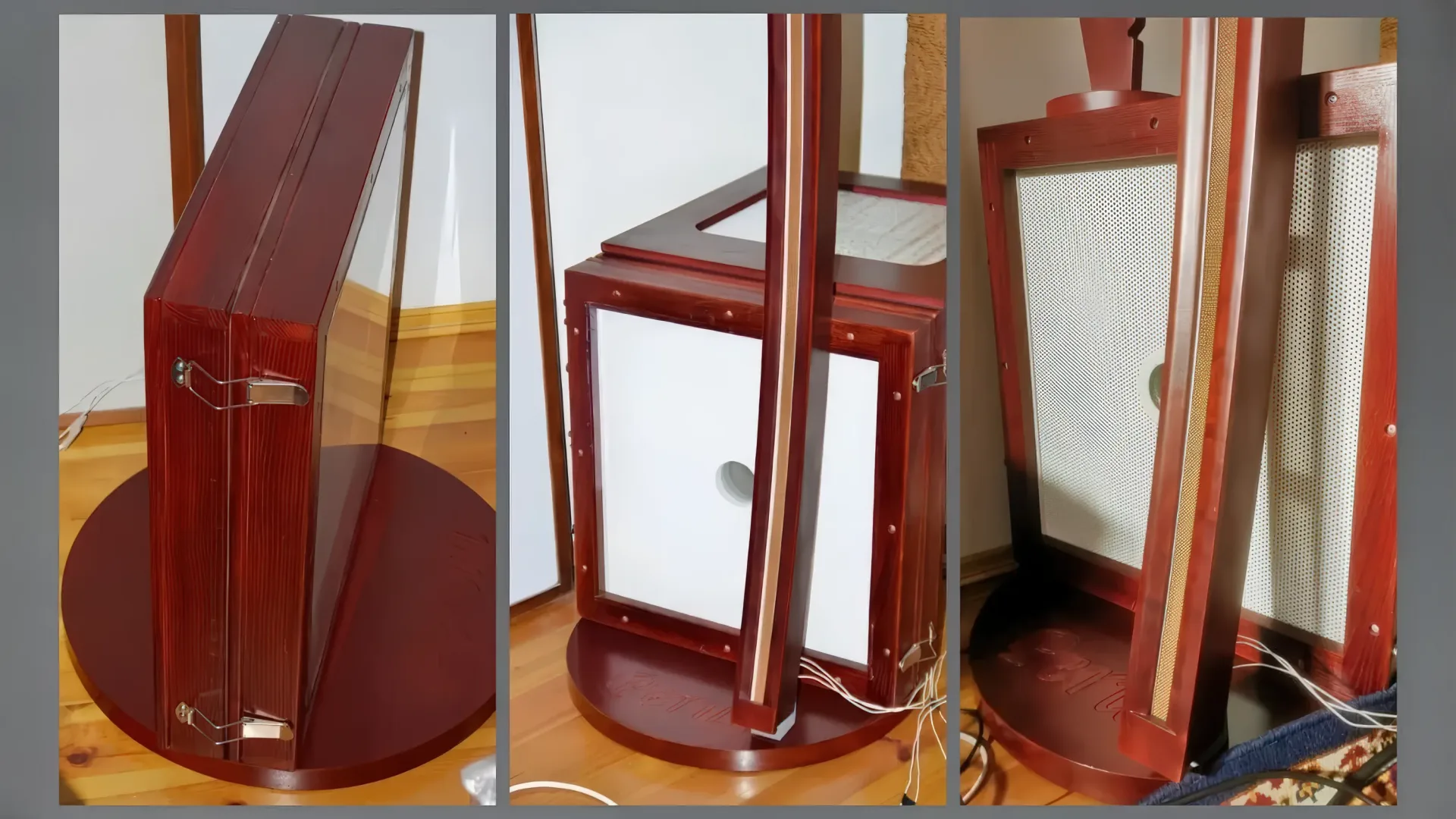
The subwoofer cabinet is braced and damped with acoustic felt to keep standing waves and resonances out of the bass. Custom step-up transformers and an integrated 5000 V multiplier bias the electrostatic panels.
- Open-baffle electrostatic panel, 180 × 15 × 5 cm
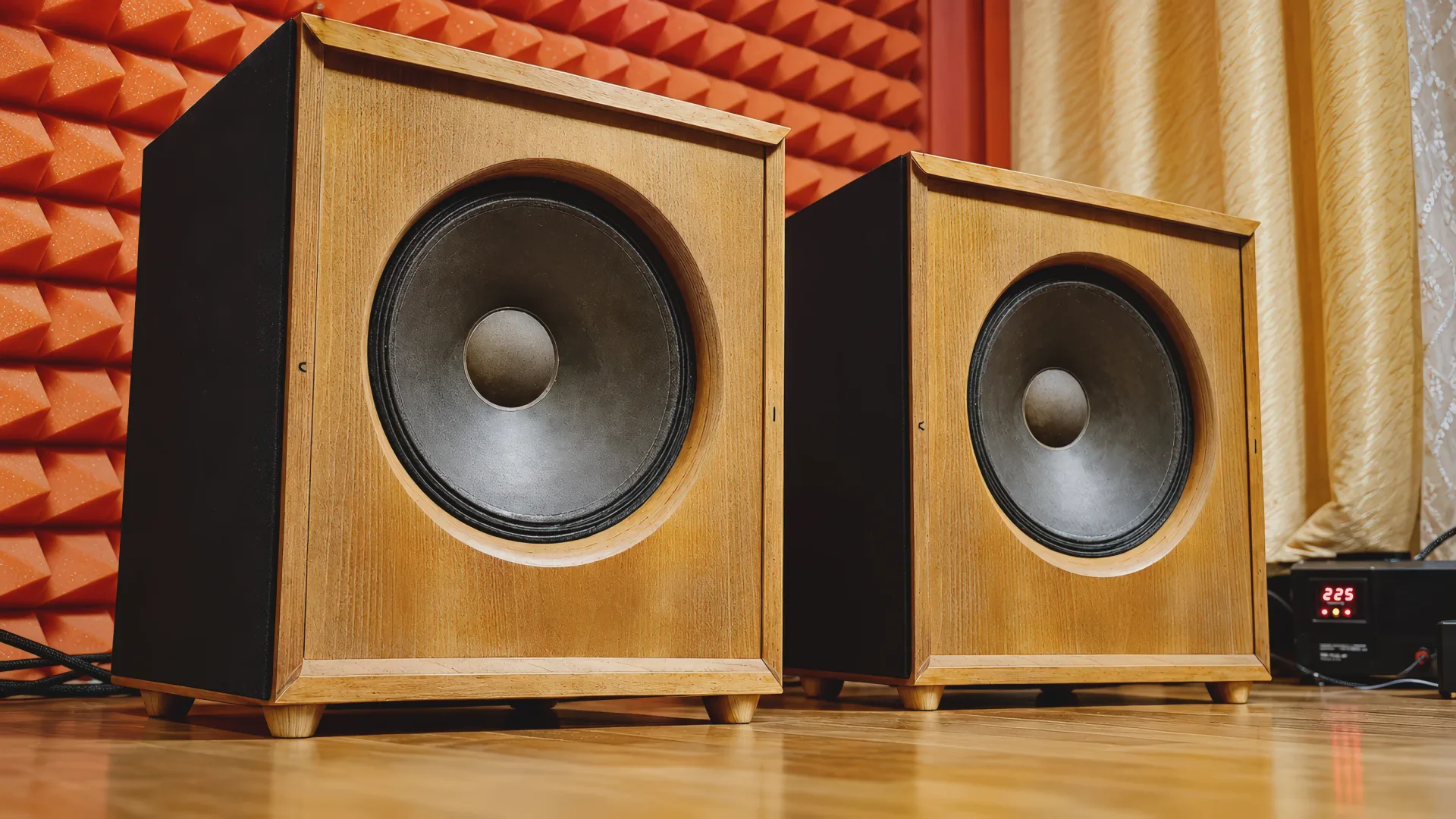
- Subwoofer 450 × 450 × 450 mm, 12″ or 15″ driver
- Active version with four Class D or Class AB amplifier modules
| Component | Manufacturer | Country of origin |
|---|---|---|
| Electrostatic panel (2-micron membrane) | Demograf Audio | Own manufacture |
| Subwoofer driver 12–15″, electromagnet drive | Demograf Audio | Own manufacture |
| External analogue crossover and preamplifier | Demograf Audio | Own manufacture |
| Amplifier modules (active version) | Demograf Audio | Own manufacture |
Photo {n} of {total}
Simplified diagram of the stock configuration. The exact circuit for your options is confirmed with the atelier.
Specification
Download the brochure PDF · EN · 0.8 MB
Measured on the stock configuration; options may change the figures.
- Transducer type
- Electrostatic + Dynamic Subwoofer
- Type of speakers
- Electrostatic. Passive version: no built-in amplification, driven by your amplifier; active version with built-in Class D amplification. The 5,000 V bias supply runs from the mains in both
- Number of ways
- 2 (HF/MF Electrostatic Panels + Dedicated Subwoofer)
- Subwoofer inputs
- RCA / speaker binding posts (10 kΩ input impedance)
- Impedance
- 2–4 Ω (drops to about 1 Ω at 20 kHz)
- Sensitivity
- 85–86 dB
- Overall frequency response
- 20 Hz – 20 kHz
- Subwoofer response
- 10 Hz – 600 Hz
- HF/MF section response
- 600 Hz – 20 kHz
- Subwoofer driver
- 12–15 inch Demograf Audio Subwoofer
- Bias voltage
- 5000 V (Integrated multiplier system)
- Recommended room size
- Minimum 20–25 m²
- Mains
- 100 / 120 / 230 V — set at order time, plug to match (NEMA, Schuko, BS 1363 / type G)
- Total weight
- ~50 kg
- HF/MF dimensions
- 180 × 15 × 5 cm
- Subwoofer dimensions
- 450 × 450 × 450 mm
Custom options
Stock items are included in the price. Every option is agreed with the atelier before the build starts.
Configuration
- Standard Edition Active — Active Loudspeaker System
- Premium Edition Active — Premium subwoofer, preamplifier, amplifier and crossover components
- Upgrade to Atreus Fully Electrostatic Loudspeakers
- Four dedicated Class-D amplifier modules engineered specifically for Menelaus by Demograf Audio
- Four dedicated Class-AB amplifier modules engineered specifically for Menelaus
- External studio-grade analogue crossover from Demograf Audio
- Passive Transformer Volume Control Preamplifier (TVC)
- Relay-Switched TVC Preamplifier with Remote Control Suite
- Active Solid-State Preamplifier with Remote Control Suite
- Active Tube Preamplifier with Remote Control Suite
- Dual-Mode Relay-Switched TVC with Switchable Active Solid-State Stage
- Dual-Mode Relay-Switched TVC with Switchable Active Tube Stage
- Premium 12 inch Demograf Audio Subwoofer
- Premium 15 inch Demograf Audio Subwoofer
- Analogue Filter with Precision LF Tuning
- Individual Custom Design
- Custom Exotic Solid Wood
- Priority build (+50% of the price)
Regional version
- 230 V — Schuko plug (Europe) Stock
- 120 V — NEMA plug (North America)
- 100 V — NEMA plug (Japan)
- 230 V — BS 1363 / type G plug (UK · Middle East)
Pairs well with
Does the Menelaus use tubes?
The loudspeaker itself has no tubes. In the full system an active tube preamplifier can be chosen as the volume control.
How is the Menelaus serviced?
Loudspeakers need no routine service. Drivers, crossovers and terminals are repaired by the atelier for as long as parts exist.
How is it delivered?
Shipping and insurance are paid by the buyer and shown as a separate line in your quotation. Every unit is packed for long-distance transport in heavy-duty flight cases and a wooden crate.
Which mains voltage and plug?
Each piece of gear is built for 100 V, 120 V or 230 V mains with the matching plug (NEMA, Schuko or BS 1363 / type G). The voltage is fixed at order time, so tell us where the unit will be used.
How long does the Menelaus take to build?
Build time is six months or more from the queue deposit, depending on the configuration and the queue; delivery takes from one month after completion. The atelier builds seven instruments a year. A priority build is available for an extra 50% of the price: your unit is moved ahead in the build queue.
* Photos are taken from real systems and show the specific configuration of a particular customer; your unit can look the way you want — all our equipment is fully customisable.

